Using Major League Baseball as a case study, Cornell research highlights potential shortcomings in diversity metrics that could obscure inequities in sports and other organizations.
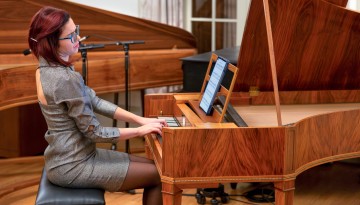
A $5 million gift from the Abraham J. & Phyllis Katz Foundation to the Cornell Center for Historical Keyboards will secure the future of its museum-quality holdings, as well as a rich program of concerts, festivals and educational offerings.
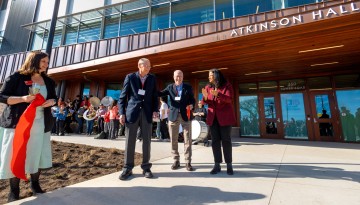
Atkinson Hall officially opened its doors with a ribbon-cutting ceremony April 9, realizing its benefactors’ vision of the facility as a home for impact-driven research across grand challenges in sustainability, cancer biology and immunology, nutrition, global health and computational biology.
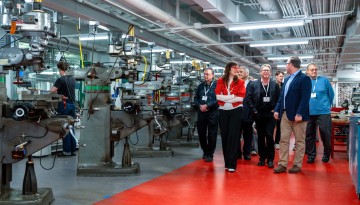
The software company is contributing $2 million each to Cornell’s College of Architecture, Art and Planning and Cornell Engineering to name and update “design and make” spaces.
On April 25, seven Society for the Humanities’ Fellows will present their projects in progress during the annual Spring Fellows’ conference, highlighting the various ways that the theme of silence has been explored –
The culmination of a year-long study of “New/Futurism: Installation, Intermedia, Interactive & Immersive Dance,” the April 25-26 performance also features the work of influential choreographer Merce Cunningham and highlights collaboration among art forms.
More than 300 alumni, students, faculty, staff and community members joined Celebration Ezra 2025 on April 10-11, to network, get inspired and honor the Cornell Entrepreneur of the Year John Bicket ’02.
Menachem Rosensaft, adjunct professor at Cornell Law School, will read poems from his latest book, “Burning Psalms: Confronting Adonai after Auschwitz,” on April 21 at White Hall, room 110. A Q&A discussion will follow.