Mimicry appears to be a fundamental behavior that helps people understand each other, not just when they get along, new Cornell psychology research finds.
The Graduate School welcomed 50 new Dean’s Scholars. The program honors students for their commitment to academic excellence and advancing diversity, access, equity, inclusion and belonging.
A Cornell professor’s election forecasting model correctly picked Trump’s win this year in all 50 states – and would have correctly predicted 95% of states in every election since 2000.
A newer hepatitis B vaccine was superior to an older type in inducing a protective antibody response among people living with HIV who didn’t respond to prior vaccination, according to a study led by a Weill Cornell Medicine investigator.
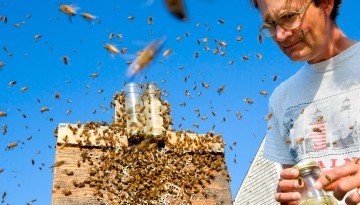
In “Piping Hot Bees & Boisterous Buzz-Runners: 20 Mysteries of Honey Bee Behavior Solved,” biologist Thomas Seeley shares some of the findings of his decades’ worth of investigations into honey bee behavior.
From root rot and powdery mildew to white flies and Lewis mites, the threats to poinsettias abound - NYS growers persevere with the support and expertise of Cornell faculty and staff.
Weill Cornell Medicine has received a four-year, $1.4 million grant from the U.S. Department of Defense to investigate a new therapeutic approach for the most common form of kidney cancer.