The garden - a collaboration between Onondaga Nation and Cornell Botanic Gardens - will enable Onondaga Nation School to incorporate more lessons from and about their own culture.
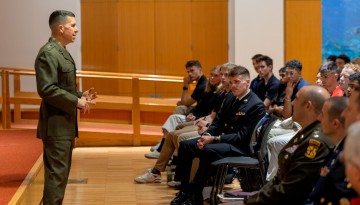
On Veterans Day, a series of speakers shared personal reflections about how camaraderie shapes both military and academic life as part of Cornell’s celebration of its military and veteran community.
Experts in a Nov. 20 panel discussion, “A Polarized Supreme Court: What It Means for Democracy,” will explore the politics of and declining public confidence in the court, and its potential response to likely challenges to the policies of the next administration.
A new analysis finds that Cornell Tech, its alumni and startups achieved $768 million in total economic impact in New York City in the 2023-24 fiscal year. That impact is expected to reach $1.5 billion by 2030.
Cornell AES manages nine research farms and 127,000 square feet of greenhouse space on Ithaca’s campus and across New York state. While these facilities are designed to support research, they are also used as unique teaching tools for two dozen courses covering topics in plant science, soil science, entomology, food systems, agricultural machinery, and more. This is the third story in a series about on-farm teaching.
Five Johnson School MBA students designed the case, organized the judging and facilitated the Emerging Markets Institute’s Corning Case Competition, “Powering Vietnam’s Future: The Rise of Electric Vehicles,” which attracted a record number of entrants.