Tuskegee University has become the latest partner of the Center for Research on Programmable Plant Systems (CROPPS), a Science and Technology Center funded by the U.S. National Science Foundation aimed at developing tools to communicate with plants and the associated organisms that make up their microbiomes.
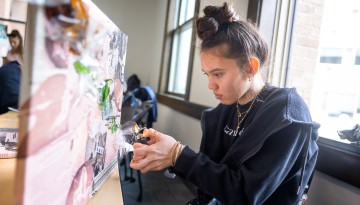
Through the capstone course Art and Science of the Mohawk River Watershed, a group of environment and sustainability majors studied the river through the lenses of art, science and culture, deepening their understanding of a complex natural system.
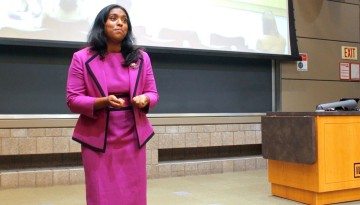
Cornell Speech Team members shared stories about gender, ethnicity, racism and their hometowns during the most successful season in the team’s 40-year history.
Kim Haines-Eitzen, the Paul and Berthe Hendrix Memorial Professor of Near Eastern studies, and Mostafa Minawi, associate professor of history and director of Critical Ottoman and Post-Ottoman Studies, will pursue research projects in residence in Durham, North Carolina.
Graduating transfer students from SUNY and CUNY community colleges reflect on their journeys – as well as the support, opportunity and community they've found at Cornell.
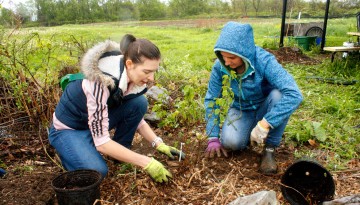
The inaugural Interfaith Service Day provided students with the opportunity to meet people from different backgrounds and faiths while planting trees at Groundswell Incubator Farm.
The Brooks School Tech Policy Institute (BTPI) has announced a $1M project to study financial freedom in countries with authoritarian governments. Led by BTPI Director Sarah Kreps, the research will employ quantitative and qualitative approaches to understanding the use of Bitcoin and stablecoins by individuals around the world.