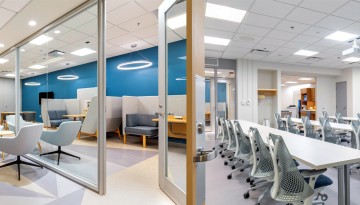
The Cornell Center for Social Sciences has moved into a newly renovated, 2,500-square-foot space on the second floor of Clark Hall, which will serve as a hub for the social sciences on campus.
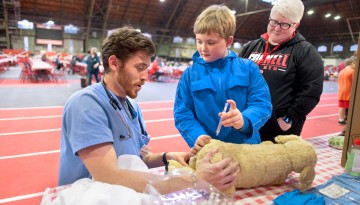
More than 1,000 staff, faculty, retirees and relatives gathered on campus Oct. 14 for the annual Employee Celebration, which included athletic events, a community dinner – and, for the first time, family rock climbing, bowling and a scavenger hunt.
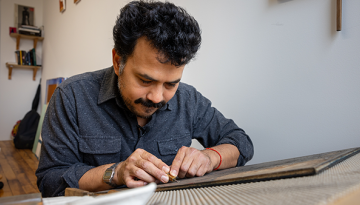
Director of Undergraduate Studies and Assistant Professor in the Department of Art Oscar Rene Cornejo offers insights into his creative practice, approach to pedagogy, and the college's Bachelor of Fine Arts program he helps to shape and lead.
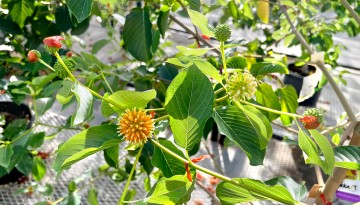
Cornell researchers have harnessed the power of baker’s yeast to create a cost-effective and highly efficient approach for unraveling how plants synthesize medicinal compounds, and they have used the new method to identify key enzymes in a kratom tree.
After the height of the COVID-19 pandemic, students belonging to underrepresented ethnic minority groups struggled to bounce back academically as compared with their non-minority classmates.
Retired Cornell educators have until Nov. 6 to submit applications for the 2024 Podell Endowment Awards, which support projects that aim to make the world a better place.
Cornell University Library published the catalog Fables in Jewish Culture: The Jon A. Lindseth Collection, a comprehensive guide to the nearly 400 Jewish fables from around the world that Lindseth entrusted to the library in 2018.
Entrepreneurs will gather to hear fireside chats with top business leaders, enjoy multiple networking and engagement opportunities and hear startup pitches at Entrepreneurship at Cornell’s Eclectic Convergence 2023.
People judge members of their own circles more harshly than they judge individuals from other groups for the same transgressions, new Cornell research has found.