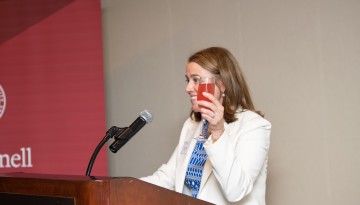
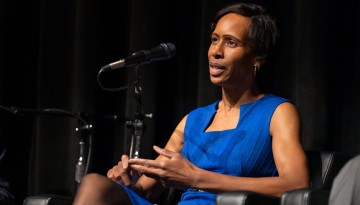
Inaugural Dean Colleen Barry offers a celebratory toast as the Cornell Jeb E. Brooks School of Public Policy marks its first anniversary with a party at the Statler Hotel, attended by more than 300 students, faculty, staff and friends of the school.
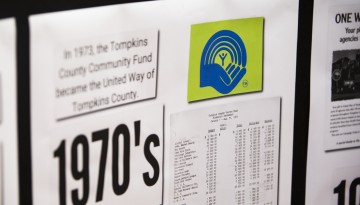
The Cornell United Way campaign, a yearly campus drive that supports an overall campaign run by United Way of Tompkins County to raise funds for community members in need, begins Sept. 28.
At the event, “Aftershocks: Geopolitics Since the Ukraine invasion,” a panel of faculty and experts raised concerns about worldwide consequences stemming from the ongoing conflict that began with Russia’s invasion of Ukraine.
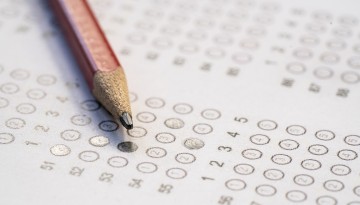
New research shows that the reason children show more progress on math exams than on English exams partially stems from incentives embedded in the way standardized tests are designed.
Living wage legislation would lead to pay increases for 30% to 40% of all workers in Tompkins County, and 65% to 75% of Black workers, according to a new policy brief spearheaded by the ILR School.
As surveying the cosmos for the new James Webb Space Telescope gets hot, Cornell researchers have modeled and synthesized lava in order to discover far-away, volcanic exoplanets.