The endowed professorships will fund ground-breaking research in the areas of psychology and human development, fiber science and apparel design, and nutritional sciences.
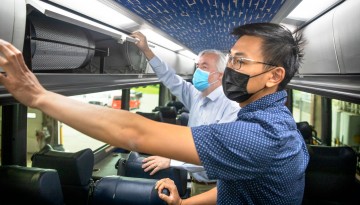
The Cornell Campus-to-Campus buses have resumed service thanks to a new air filtration system that was designed, built and installed by a team of faculty and staff, and at the center of the collaboration, a master’s student who decided to do something challenging with his summer break.
The ReSounds Festival Sept. 4-5 kicks off a yearlong project focused on innovation in acoustic instruments and includes installations at the Johnson Museum and concerts each day beginning at 4 p.m. that take listeners on a pilgrimage to various locations around the Arts Quad.
A new program provides undergraduates, graduate students and postdoctoral researchers from the College of Engineering and the College of Arts and Sciences with hands-on experience in developing innovative small spacecraft missions in high-priority areas of space science.
In a new book, “Movies on Our Minds: The Evolution of Cinematic Engagement,” psychology professor emeritus James Cutting explores the perceptual, cognitive and emotional reasons we enjoy popular films.
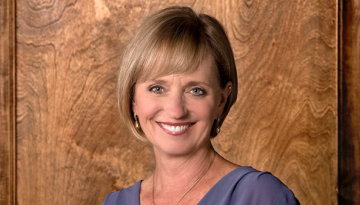
The leadership and dynamic accomplishments of Sheila Allen ’76, D.V.M. ’81, have both shaped the veterinary profession and earned her the 2021 Daniel Elmer Salmon Award for Distinguished Alumni Service from the Cornell College of Veterinary Medicine.
Doctoral candidate Karla García-Martínez and Professor of Immunology Cindy Leifer were selected as recipients of the 2021 Howard Hughes Medical Institute (HHMI) Gilliam Graduate Fellowships for Advanced Study.