To hunt a disease that threatens eelgrass – critical seaside meadows – the NSF has awarded researchers from Cornell and its partner institutions with a three-year $1.3 million grant.
Lawrence Kidder, a senior research associate in astronomy who helped validate the detection of gravitational waves, has been elected a fellow of the American Physical Society.
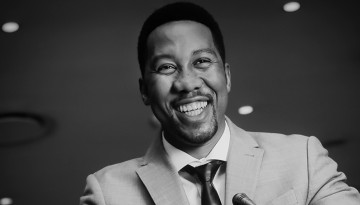
Ndaba Mandela, grandson of Nelson Mandela, will visit campus Oct. 12 for a public lecture as he celebrates the 100th anniversary of his grandfather’s birth.
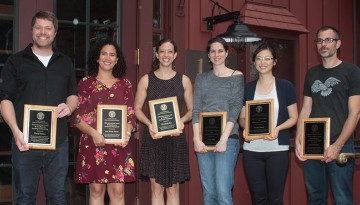
More than 50 Cornell undergraduates, graduate students, faculty and staff attended the ACM Richard Tapia Celebration of Diversity in Computing – an opportunity for those who may feel isolated to connect with colleagues and grow.
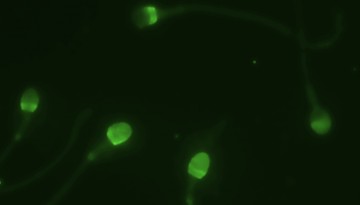
A new test developed at the College of Veterinary Medicine quantifies “capacitation,” the changes that take place within a sperm cell that enable it to fertilize.
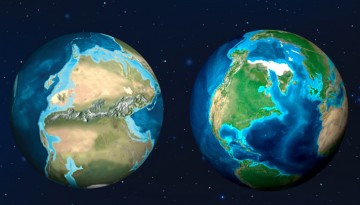
By looking at Earth’s full natural history and evolution, astronomers may have found a template for vegetation fingerprints – borrowing from epochs of changing flora – to determine the age of habitable exoplanets.