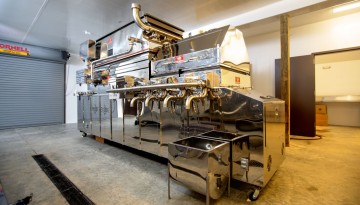
The Cornell Maple Program has opened an advanced, New York state-funded maple research laboratory, an upgrade that will enable research on making high-quality syrup, and new and existing maple products – all at commercial scales.
Embark Veterinary, Inc. – a canine genetics startup company that graduated from Cornell’s McGovern Center incubator in late 2017 – announced $75 million in venture funding on July 26.
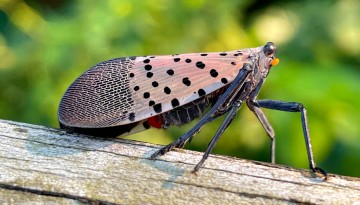
The spotted lanternfly – an invasive, destructive pest with a wide range of hosts including grapes, apples, hops, maple and walnut – has spread to a growing number of counties in New York state.
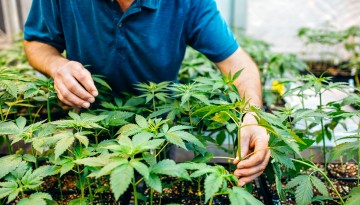
A new Cornell study debunks misinformation on websites and in news articles that claim that environmental or biological stresses – such as flooding or disease – cause an increase in THC production in hemp plants.
Two new publications examining cassava flowering reveal insights into the genetic and environmental factors underpinning one of the world’s most critical food security crops.
Honeybees are skilled architects who plan ahead and solve design challenges when constructing honeycombs, offering strategies that engineers may learn from when they use honeycomb structures in industry.
The Samuel Curtis Johnson Graduate School of Management is announcing a new BioEntrepreneurship Initiative to connect MBA students and life science researchers to life science companies in NYS while catalyzing the formation of new life science startups.
A new method that analyzes how individual immune cells react to the bacteria that cause the disease could pave the way for new vaccine strategies, and provide insights into fighting other infectious diseases around the world.
A new study describes how an interdisciplinary team of Cornell researchers used a state-of-the-art microscopy technique to reveal protein structures and key steps of a CRISPR-Cas system that holds promise for developing an improved gene editing tool.