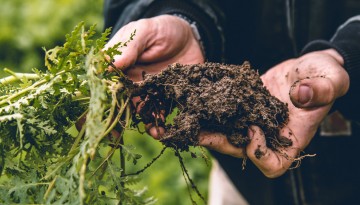
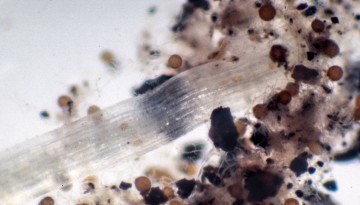
A new study describes a breakthrough method for imaging the physical and chemical interactions that sequester carbon in soil at near atomic scales, which may have implications for mitigating climate change.
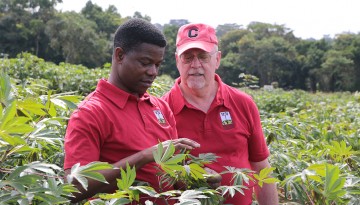
Five new cassava varieties developed with support from NextGen Cassava, an international partnership led by Cornell, have been approved for release in Nigeria.
Each year, the Center for Teaching Innovation grants funding through the Innovative Teaching & Learning Awards to help faculty explore new strategies and tools for enhancing student learning.
With a recent 90% decline in population, sunflower sea stars – once ubiquitous all along the Pacific Coast, from Mexico to Alaska – may be on the brink of extinction.
To deflect future world food crises created by climate change, a Cornell-led international group has created a road map for global agricultural and food systems innovation.
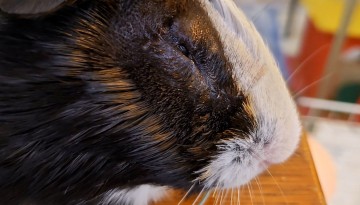
Odin the guinea pig, who a local family adopted from the SPCA of Tompkins County, suffered from eyelid agenesis but doctors at the Cornell University Hospital for Animals performed two surgeries and he’s fully recovered.
The 2020 State of New York Sustainability Conference – held online Dec. 2-4 – focused on connecting human health, social justice, feeding the world and protection of the environment.
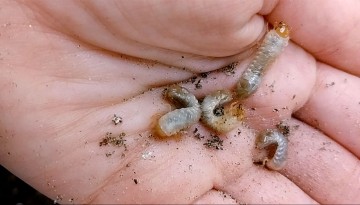
A team of Cornell scientists will use acoustic technology to develop efficient and affordable ways to manage soil-dwelling pests and their predators, thanks to a two-year grant from the USDA.
A new grant will investigate how bacteria that live inside the cells of fungi may shape the biology, evolution, biodiversity and function of these fungi – research with important practical applications for industry, sustainable agriculture and preventing food spoilage.