Fay Wei Li, from the Boyce Thompson Institute, and researchers from across the globe have sequenced the genomes of three hornworts, which could lead to crops that produce higher yields and use less synthetic fertilizer.
Once people are aware of the issues surrounding genetic information, they’re more concerned about its use and expect to be better compensated for providing it, according to a new survey co-directed by a Cornell researcher.
At the Cornell University Hospital for Animals, Ntsumi the white African lioness was diagnosed with an intestinal mass that veterinarians surgically removed.
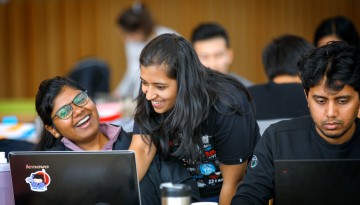
Students in fields ranging from computer science and engineering to business, agriculture and animal science convened at the second Digital Agriculture Hackathon, Feb. 28-March 1, with a shared purpose: to combine their disparate skills to brainstorm ways to make the world a better place.
Researchers from Cornell and the Mars Global Food Safety Center can complete whole-genome sequencing to determine salmonella serotypes in two hours and the whole identification process within eight hours.
Most birth control options rely on women to manage, but promising Cornell research from the lab of Paula Cohen, professor of genetics in the College of Veterinary Medicine, may be changing the game by tackling male contraception.
In recent years, researchers in the lab of Hening Lin discovered enzymes that remove chemical modifications – “codes” used for cell signaling – from proteins.