It’s no secret that coordination between marketing and sales is an important component of generating revenue for businesses – unfortunately the reality isn’t quite so harmonious. Businesses invest countless hours and thousands of…
The process of identifying promising small molecule drug candidates that target cancer checkpoints may become faster and smarter through virtual screening, according to Weill Cornell Medicine researchers.
Weill Cornell Medicine researchers have received a five-year, $6.2 million grant from the National Institute on Aging, part of the National Institutes of Health, to build a portable, high-resolution Positron Emission Tomography scanner that can detect the earliest stages of Alzheimer’s disease.
Cornell researchers have found that in social VR settings, the decision to disclose an invisible disability – a physical, mental or neurological condition that’s not apparent but can limit a person’s movements, senses or activities – is personal.
Dr. Chani Traube, professor of pediatrics at Weill Cornell Medicine, has been awarded a $3.4 million grant from the National Institutes of Health for a clinical trial called Optimizing Pain Treatment in Children on Mechanical ventilation.
Weill Cornell Medicine researchers have discovered a mechanism that ovarian tumors use to cripple immune cells – blocking the energy supply T cells depend on. The work points toward a promising new immunotherapy approach for ovarian cancer.
A new system can accurately assess the chromosomal status of in vitro-fertilized embryos using only time-lapse video images of the embryos and maternal age, according to a study from investigators at Weill Cornell Medicine.
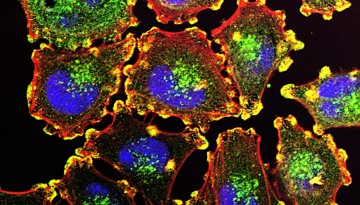
Investigators from Weill Cornell Medicine have discovered a defense mechanism that protects skin cancer cells from oxidative stress and helps them spread.