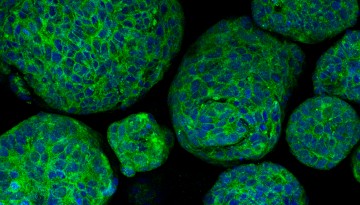
Growing miniature tumors from a patient’s cells in the laboratory may help scientists personalize treatments for those with a rare form of prostate cancer, according a study by Weill Cornell Medicine and NewYork-Presbyterian scientists.
A very low carbohydrate, high-fat diet called the ketogenic diet may improve the effectiveness of an emerging class of cancer drugs, according to a new study.
Every family in America has an immigration story. In a new anthology, Andrew Tisch and Mary Skafidas showcase a variety of voices whose own origin stories illustrate the rich fabric of cultures and backgrounds that comprise the United States.
Every other Friday, individuals incarcerated at the Queensboro Correctional Facility take the Know Your Employment Rights course on employment rights taught by the ILR Labor and Employment Law Program.
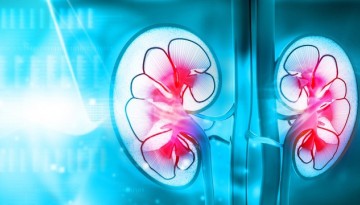
Researchers at Weill Cornell Medicine and NewYork-Presbyterian/Weill Cornell Medical Center propose a simpler, safer procedure for treating a certain type of early-stage kidney cancer in older adults.
A year into Cornell’s Academic Integration Initiative, Gary Koretzky ’78 is relocating to Ithaca and taking on a new title to continue leading efforts to better promote, build and enhance collaborative research efforts across Cornell's campuses.
Connecting upstate and downstate, urban and rural, a pavilion made from reused metal grain bins opened to the public June 23 on Governors Island in lower New York Harbor. Four Cornell faculty members collaborated on the project with a team including students and alumni.
Tapan Parikh, associate professor in information science at Cornell Tech, has been named faculty director for the Milstein Program in Technology and Humanity.