Weill Cornell Medicine researchers have received a five-year, $6.2 million grant from the National Institute on Aging, part of the National Institutes of Health, to build a portable, high-resolution Positron Emission Tomography scanner that can detect the earliest stages of Alzheimer’s disease.
Dr. Chani Traube, professor of pediatrics at Weill Cornell Medicine, has been awarded a $3.4 million grant from the National Institutes of Health for a clinical trial called Optimizing Pain Treatment in Children on Mechanical ventilation.
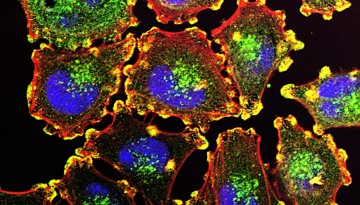
Investigators from Weill Cornell Medicine have discovered a defense mechanism that protects skin cancer cells from oxidative stress and helps them spread.
Professors Dr. Silvia Formenti and Dr. Massimo Loda have been elected to the National Academy of Medicine, in recognition of outstanding professional achievement and major contributions to the advancement of the medical sciences.
The fireside chat was part of a two-day visit by Dr. Robert M. Califf, commissioner of the U.S. Food and Drug Administration, who focused on medicine and health care innovations.
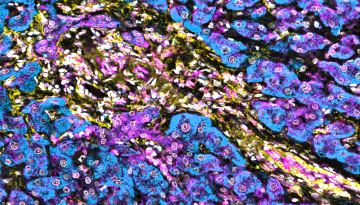
A study from Weill Cornell Medicine provides new insights into a pair of proteins and their opposing functions in regulating the interferon response in hepatic stellate cells, a critical immune component in the liver’s fight against tumors.
Interim President Michael I. Kotlikoff invoked history – Cornell’s and his own – in his first State of the University address, delivered Oct. 18 in Call Auditorium during the Trustee-Council Annual Meeting.