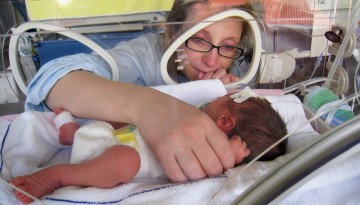
Among preterm newborns, greater exposure to the mother’s voice after birth appeared to speed up the maturation of a key language-related brain circuit.
Finance can bridge the gap between climate science and business decision-making – and communication, innovation and education are critical, according to a panel of experts convened by the Cornell SC Johnson College of Business and the Cornell Atkinson Center for Sustainability during Climate Week 2025.
The MyCoast New York app has already provided forecasters and emergency managers with a new understanding of flooding around the state, as sea levels rise and storms intensify.
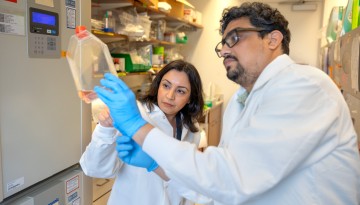
A federal stop-work order has threatened the progress a Weill Cornell Medicine researcher has made in understanding a lethal and treatment-resistant form of prostate cancer.
Artificial intelligence is everywhere, from the apps people use to the systems that shape hiring decisions and healthcare. But what happens when these tools don’t work equally well for everyone? That question drives the research of Allison Koenecke, a new assistant professor of information science at Cornell Tech.
Investigators at Weill Cornell Medicine and Cornell’s Ithaca campus will use a $5.1 million grant from the NIH to launch the Autism Replication, Validation, and Reproducibility Center, which aims to improve the reliability of autism research.