First-of-their-kind observations reveal new details about melting at the grounding line of the vulnerable Thwaites Glacier that is contributing to its retreat and potentially to sea-level rise, according to Cornell researchers and international collaborators.
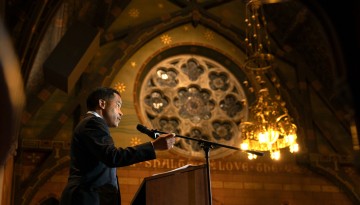
Stanford University’s Richard T. Ford delivered the annual lecture, focusing on the lack of difficult discussions on generations of race-based exclusion and exploitation.
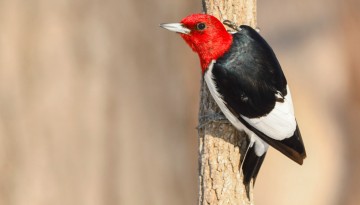
The 26th annual Great Backyard Bird Count – in which bird and nature lovers around the world unite in an effort to tally as many species as possible over four days – begins Feb. 17 and runs through Feb. 20.
Pascal “Toni” Oltenacu, a professor emeritus of animal science who used mathematical modeling to predict disease, longevity and reproduction in dairy cattle, died Dec. 10, 2022 in Gainesville, Florida. He was 84.
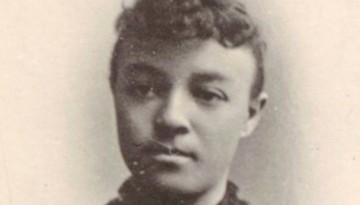
After graduating with a degree in botany in 1890, Jane Eleanor Datcher taught chemistry at the first – and best – public high school in the U.S. for Black youth and helped organize regional and national networks for Black women.
Two new grants from the Leukemia & Lymphoma Society will support Weill Cornell Medicine’s pathbreaking research on the origins of lymphomas and on treatments that exploit these cancers’ biological vulnerabilities.
Since joining the NFL Players Association as its general counsel in 2010, Sean Sansiveri ’05 has been behind the NFL’s most important measures to make the game safer – including the protocol that helped save Buffalo safety Damar Hamlin’s life.