Support for redistributive policies intended to reduce growing income inequality may depend on who people are led to consider at the top of the economic ladder, finds new psychology research by Thomas Gilovich and collaborators.
President Martha E. Pollack on Oct. 18 announced the winners of Stephen H. Weiss Awards honoring a sustained record of commitment to the teaching and mentoring of undergraduate students and to undergraduate education.
The university’s long-term investments, consisting mainly of the endowment, reached a record high total of $10 billion after their largest single-year return in more than 35 years, according to the Office of University Investments.
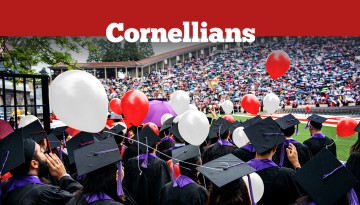
Cornellians, Cornell University’s new, digital-first publication for alumni, debuted earlier this month and is part of a partnership between the divisions of University Relations, Alumni Affairs and Development, and alumni themselves.
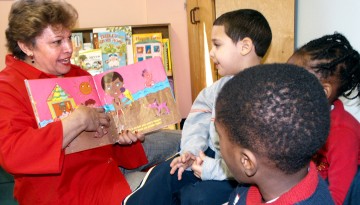
Through a partnership with Cornell Cooperative Extension, New York City’s Department for the Aging will provide child development training to volunteers in its Foster Grandparent Program.
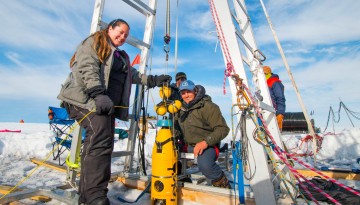
To prep for missions to Jupiter’s icy moon Europa, Britney Schmidt, associate professor of astronomy and earth and atmospheric sciences, is studying Antarctica’s ice and oceans.
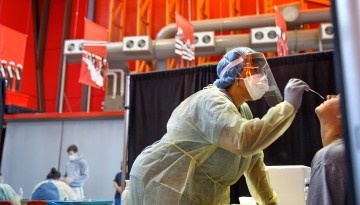
A limited number of fully vaccinated students with breakthrough but asymptomatic COVID-19 infections will be able to test out of their mandatory 10-day isolation periods early after receiving two negative tests.
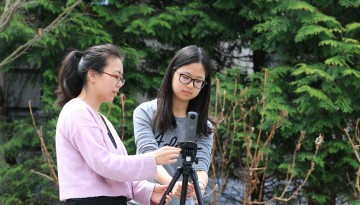
The Center for Teaching Innovation's Digital storytelling community of practice offers monthly sessions this fall for instructors to explore this inclusive teaching strategy and discuss their ideas with peers.