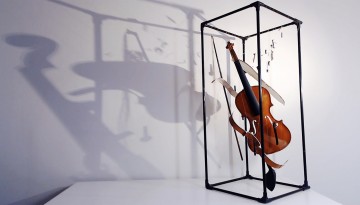
Students in the Bending Instruments course let their imaginations run free in creating unique musical instruments, using what they had on hand while sheltering at home.
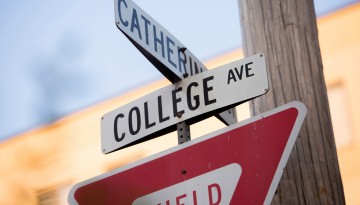
The Collegetown Neighborhood Council held a COVID-19-themed virtual meeting May 26 that included community updates and details about planning for the return of students this fall.
Economists Eleonora Patacchini and Marco Battaglini found that federal appellate judges, who are randomly assigned to judicial panels, are more likely to hire women to court clerkships after serving on panels with female colleagues.
Maureen Waller, professor of policy analysis and management in the College of Human Ecology, is the recipient of Cornell’s fifth annual Engaged Scholar Prize.
Alan G. Merten, who served as the Anne and Elmer Lindseth Dean of the Samuel Curtis Johnson Graduate School of Management from 1989 to 1996, died May 21 in Naples, Florida, of complications from Parkinson’s disease. He was 78.
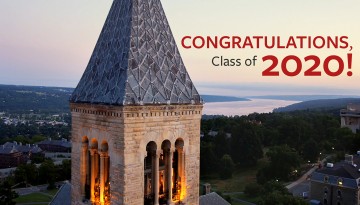
The Class of 2020 overcame unforeseen obstacles to complete their final semester, President Martha E. Pollack said in a video message to Cornell’s newest alumni May 23. “I am so very proud of each and every one of you.”
With support from the Cornell Board of Trustees, the university has instituted a moratorium on new private investments focused on fossil fuels and plans to grow the endowment's investments in alternative energy technologies.
G. Peter Lepage, the Goldwin Smith Professor of Physics, and Thomas Pepinsky, professor of government, have received two of Cornell’s highest honors for faculty members.