For Exhibit Columbus - a prominent stage for emerging designers - Michael Jefferson and Suzanne Lettieri used chromakeyed colors to create an "urban cinema screen" at a downtown plaza.
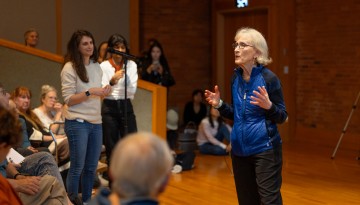
Claudia Goldin '67 used data to paint a picture of the "tremendous" progress of the U.S. women’s movement, as well as the forces that have prevented women from reaping the benefits of their rights.
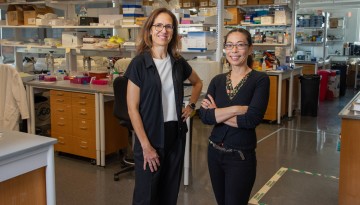
Drawing on cutting-edge technology and interdisciplinary expertise, researchers are launching Menopause Health Engineering, a new initiative to uncover how menopause shapes health and disease.
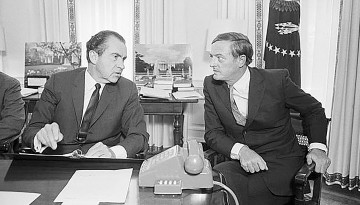
Journalist Sam Tanenhaus will share insights gained from 20 years of investigation in “The Man Who Built a Movement: How William F. Buckley Invented Modern Conservatism,” a conversation with A&S Dean Peter John Loewen, on Oct. 9.
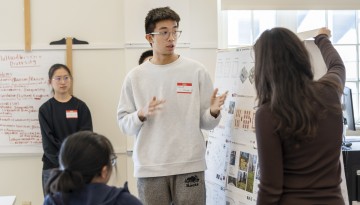
The Center for Teaching Innovation will host “What Works,” on Oct. 1, featuring presentations, the Canvas Course Spotlight awardees, and a poster showcase that will demonstrate engaged learning approaches from Cornell faculty teaching in a diverse range of courses and fields.
High schoolers from Ithaca and Brooklyn produced the artworks depicting Morrison and a local student, a collaboration that promises to introduce Morrison's work to new generations of New Yorkers.
Avner Arbel, an influential thought leader and scholar in hospitality research and education and an emeritus professor of financial management in the Cornell Peter and Stephanie Nolan School of Hotel Administration, died Aug. 22 in Jupiter, Florida. He was 90.