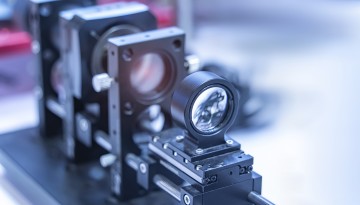
Cornell chemistry researchers have designed a light-powered, reusable catalyst that’s pre-charged by electricity and capable of driving challenging reactions, with applications including drug development and environmental clean-up.
A new $5 million initiative, funded by the Astera Institute with experimental work conducted at the Cornell High Energy Synchrotron Source, aims to make diffuse scattering accessible to the public and the broader scientific community.
Researchers developed machine-learning models that can sift through cell-free RNA and identify key biomarkers for chronic fatigue syndrome, a debilitating disease that is difficult to confirm in patients because its symptoms can be easily confused with those of other illnesses.
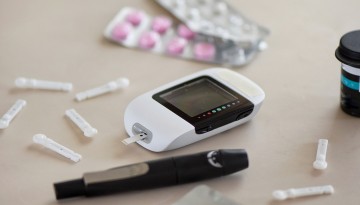
Cornell researchers have developed an implant system that can treat Type 1 diabetes by supplying extra oxygen to densely packed insulin-secreting cells, without the need for immunosuppression.
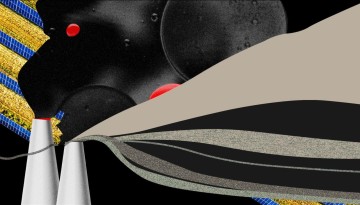
As the need to find climate change solutions becomes ever more urgent, Cornell chemists are leading the way with innovative and far-reaching discoveries, including better electric batteries, carbon capture technologies, renewable plastics and improvements in solar cells.
Phenomena common to Earth’s atmosphere can appear in the skies over some exoplanets of the “hot Jupiter” variety, a common type of gaseous giant that always orbits close to its host star, according to new research.
Project teams in Rev: Ithaca's Prototyping Hardware Accelerator will present their ideas – from AI cocktail generators to plastic recycling machines - at Demo Day on July 31.
The NSF, in partnership with Intel, will invest $20 million over five years to establish the Artificial Intelligence Materials Institute at Cornell, as part of the National Artificial Intelligence Research Institutes.