Cornell bioengineers have found a way to efficiently absorb and store large-scale, renewable energy from the sun, while sequestering carbon dioxide to use as a biofuel: Let microbes do the work.
An international research team made the first direct observation, in real time, of an elusive phenomenon – “roaming” reactions, in which a chemical compound breaks apart and its molecular fragments drift chaotically in orbit before re-forming into new compounds.
Cornell Atkinson is soliciting nominations for The Earthshot Prize, a new global award supported by The Duke and Duchess of Cambridge to tackle the world’s biggest environmental challenges.
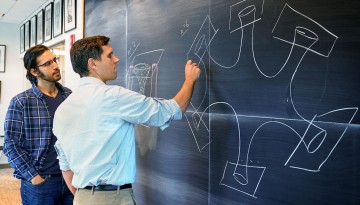
Associate professor Tom Hartman’s May 2020 paper on replica wormholes is being cited as part of a recent series of articles building toward a solution to a famous paradox in theoretical physics.
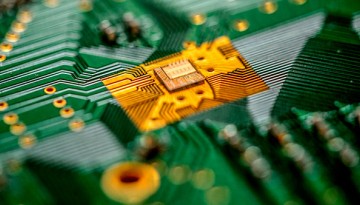
Engineers received an $880,000 National Science Foundation grant to design a new class of radio devices capable of operating across a large portion of the wireless spectrum while adaptively suppressing interferences.
Alexander Li ’20 and Haotian (Roger) Cui ’19 were elected to join the sixth cohort of Schwarzman Scholars, a program that nurtures future global leaders.
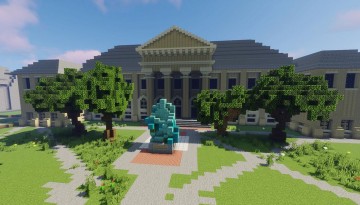
CornellCraft, a stunning virtual replica of Cornell’s Ithaca campus built in the “sandbox” gaming series Minecraft, has attracted more than 1,000 builders and players from around the globe since it launched earlier this year.
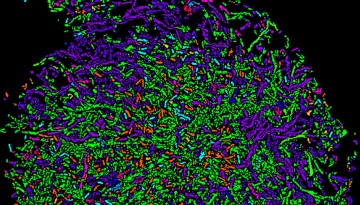
Cornell researchers developed an imaging tool to create intricate spatial maps of the locations and identities of hundreds of different microbial species, such as those that make up the gut microbiome.