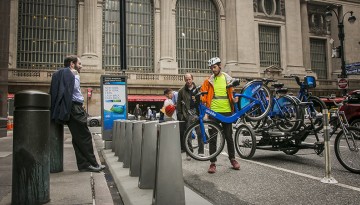
Cornell research has improved bike sharing in New York City, where a crowdsourcing system that makes real-time decisions helps make sure bikes are available when people need them.
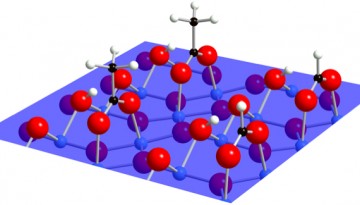
Melissa Hines, professor of chemistry and chemical biology, and research collaborators in Vienna, Austria, have begun to explain the unique self-cleaning ability of titanium dioxide.
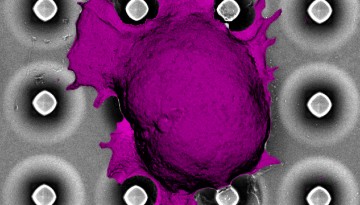
A new Cornell program will train graduate students interested in specializing in “immuno-engineering,” an emerging hybrid field that combines engineering and immunology.
Donald F. Holcomb, emeritus professor of physics and former chair of the Department of Physics and university trustee, died Aug. 9 at Kendal at Ithaca, at age 92.
Political scientist Steven Levitsky, the Sundance Institute’s Keri Putnam and biomedical engineer Stephen Quake have joined the ranks of leading scholars and public intellectuals at Cornell as Andrew Dickson White Professors-at-Large.
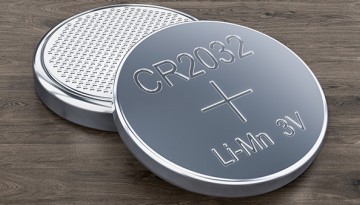
A collaboration involving researchers from physics and engineering used a new cryogenic microscopy technique to study the solid-liquid interface in lithium-metal batteries.
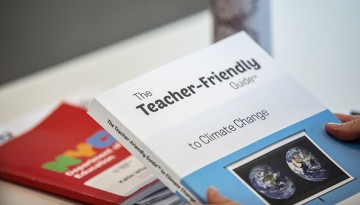
The Paleontological Research Institution and the university’s Sea Grant program raising funds to bring climate change science to every U.S. high school.
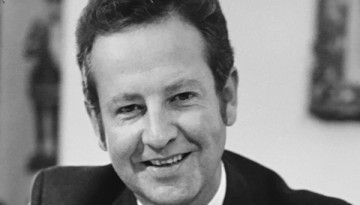
Robert Plane, a professor emeritus of chemistry who served as the university’s provost during the tumultuous late 1960s and early 1970s, died Aug. 6 in Albuquerque, New Mexico. He was 90.
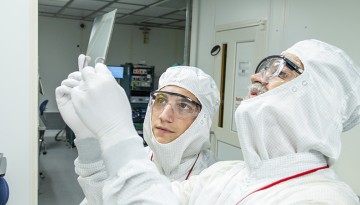
Visiting students representing the next generation of physicists got a taste of life as a researcher during a pair of eight-week summer programs hosted by the Cornell Laboratory for Accelerator-based Sciences and Education.