Researchers studying the formation of the Earth’s crust and wearable technology for daily-life applications are among those at Cornell who recently received National Science Foundation Faculty Early Career Development Awards.
Cha, whose research focuses on topological and two-dimensional nanomaterials, will lead the Cornell NanoScale Science and Technology Facility, a national open-user nanofabrication facility for university-based researchers, industry, and startups.
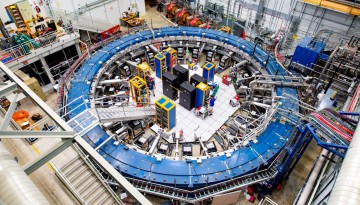
A Cornell team is playing a key role in the Muon g-2 Collaboration by designing some of the technology that captures the muon data, and helping to radically improve the precision of the measurements.
A Cornell research team has developed a new way to design complex microscale machines, one that draws inspiration from the operation of proteins and hummingbird beaks.
Many medical studies record a patient’s race using only the broad categories from the U.S. Census, which may conceal racial health disparities, a new Cornell-led study reports.
Geoscientists have long thought that water helps to drive volcanoes to erupt. Now, thanks to new tools at Cornell, scientists show that carbon dioxide can induce explosive eruptions.
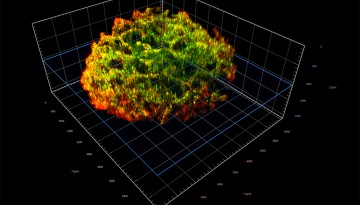
An interdisciplinary Cornell team has identified a new mechanism regulating tumor growth in the skeleton, the primary site of breast cancer metastasis: mineralization of the bone matrix.