A new vaccine distribution model expands the concept of vaccine coverage to include vaccinated person-days, which prioritize both the number of people vaccinated and the speed of getting shots into arms.
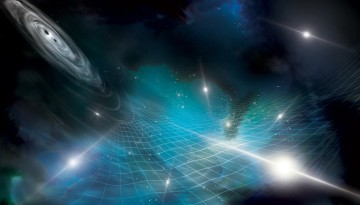
A collaboration including Cornell astrophysicists has found the first evidence of low-frequency gravitational waves believed to be generated by merging pairs of supermassive black holes.
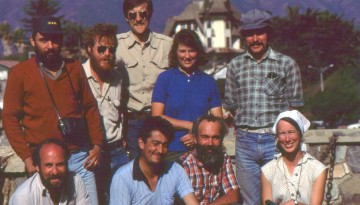
A group of Cornell geologists – known as the Cornell Andes Project – came together in early June to celebrate 40 years of research in South America and their collective success in advancing the understanding of plate tectonics.
Lena F. Kourkoutis, M.S. ’06, Ph.D. ’09, an associate professor in the School of Applied and Engineering Physics, who was internationally recognized for her advances in cryo-electron microscopy, died on June 24 at the age of 44 after living with colon cancer for two years.
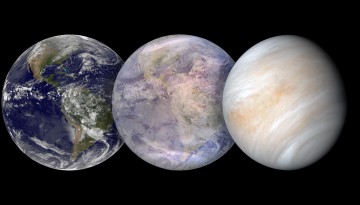
A recently discovered exoplanet may provide insights about conditions at the inner edge of a star’s habitable zone, and why Earth and Venus developed so differently, according to new astronomy research led by Lisa Kaltenegger.
The 2023 Kessler Fellows have accepted internships and will spend the summer gaining firsthand entrepreneurial experience. This year’s fellows are working at startups located from Ithaca to Beijing.
“Gas-trophysics Across the Universe,” a July 15 symposium organized by Cornell's Friends of Astronomy, will celebrate the work and lives of renowned Cornell astronomers Peter Gierasch and Riccardo Giovanelli.