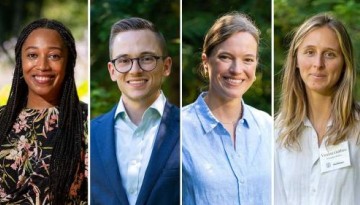
Fifteen new faculty are bringing innovative ideas in a wide range of topics to the College of Arts & Sciences’ nexus of discovery and impact, including climate change, astronomy, identity studies and the economy.
Following concern on energy-hogging cryptocurrency mining, Cornell Engineering research says that carbon capture and renewable energy may help mining operations reduce their wasteful footprint.
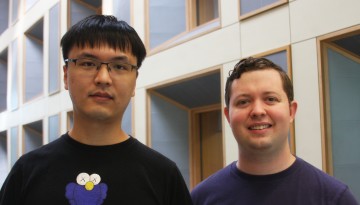
Chenhui Deng and Andrew Butt, Ph.D. students from the School of Electrical and Computer Engineering, have been awarded a 2022 Qualcomm Innovation Fellowship for their proposal “Power Inference with Self-Supervised Learning.”
As part of a pilot collaboration between AAP and Cornell Tech, colleagues came together across disciplines to explore innovative ways of teaching and designing. Now, they are poised to take their ideas even further.
Eleven 2030 Project grants were awarded to Cornell faculty for an array of fast-track climate solutions, including tools to help New York communities reduce their greenhouse gas emissions.
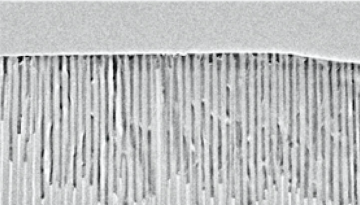
Nanomolding of topological nanowires could speed the discovery of new materials for applications such as quantum computing, microelectronics and clean-energy catalysts, according to Cornell researchers.
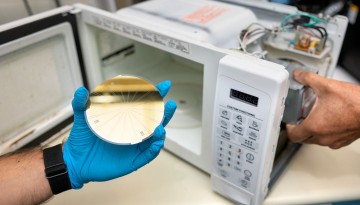
A household microwave oven modified by a Cornell Engineering professor is helping to cook up the next generation of cellphones, computers and other electronics after the invention was shown to overcome a major challenge faced by the semiconductor industry.