An autonomous artificial intelligence platform developed at Cornell streamlines materials research by quickly identifying key features in a microscopy image.
Doctoral student Cátia Dombaxe is bringing badly needed practical science education to impoverished areas of Angola through the STEAMpact Foundation, a nonprofit she founded in 2024.
Nobel Laureate John M. Martinis will speak about his research in quantum mechanics from 5-6 p.m. April 8 in the Rhodes-Rawlings Auditorium, Room KG70 in Klarman Hall.
Since the early days of modern cosmic exploration, Cornell scientists have led the way, from guiding rovers through the red dust of Mars to searching for other life in the universe; and from modeling exotic stars to detecting the faint ripples of gravitational waves.
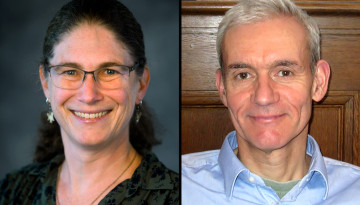
Engineering professor Lara Estroff and plant science professor Klaas van Wijk have been elected fellows of the American Association for the Advancement of Science, the world’s largest general scientific society.
Cornell researchers have developed a non-precious-metal catalyst that represents a major step toward alkaline fuel cells that use inexpensive commodity metals, such as nickel and cobalt, in several energy applications.