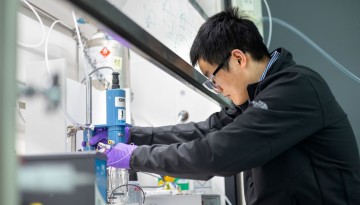
In making hydrogen a viable, clean-energy alternative to carbon-based fuels, Cornell and two research-startups have joined a consortium that aims to propose a Northeast research hub.
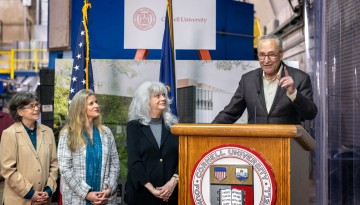
The Cornell High Energy Synchrotron Source celebrated the groundbreaking for its new $32.6 million High Magnetic Field beamline – the facility’s latest milestone.
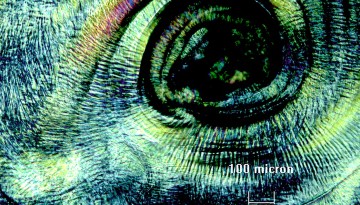
A Cornell-led project has created synthetic nanoclusters that can mimic hierarchical self-assembly all the way from the nanometer to the centimeter scale, spanning seven orders of magnitude.
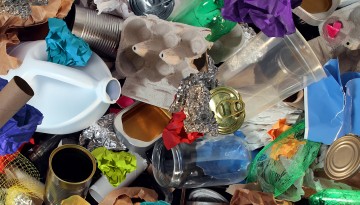
Researchers have discovered a new path for polystyrene, a type of plastic that makes up a third of landfill waste worldwide, that includes being upcycled into benzoic acid - a chemical with wide commercial demand.
The newest cohort of Ph.D. candidates in Cornell Engineering's Commercialization Fellowship will spend the remainder of the year learning the skills and tools to bring their technologies to market.
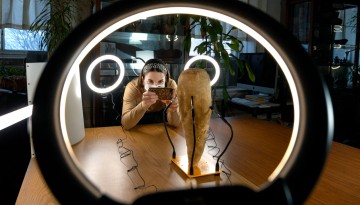
Master’s student Carol Anne Barsody is working with an array of interdisciplinary collaborators to explore the origins of a mummified bird and create a multisensory exhibition that rethinks the way ancient artifacts are presented in museums.
Cornell engineers have created a deep-ultraviolet laser using semiconductor materials that show great promise for improving the use of ultraviolet light for sterilizing medical tools, purifying water and sensing hazardous gases.
J.J. Zanazzi, Ph.D. ’18, has been selected for a 2022 51 Pegasi b Fellowship, which provides exceptional postdoctoral scientists with the opportunity to conduct theoretical, observational, and experimental research in planetary astronomy.
The award was announced March 31 and comes with $1 million in research funding from the National Science Foundation’s Division of Civil, Mechanical and Manufacturing Innovation.