Five Cornell faculty members have been elected fellows of the American Association for the Advancement of Science, the world’s largest general scientific society.
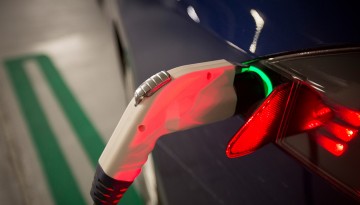
A new plan being piloted by NYSEG, in collaboration with Cornell researchers, aims to encourage electric vehicle owners to delay charging in exchange for lower prices, in order to coordinate power use across the grid.
A team led by physics professors Itai Cohen and Paul McEuen is using the binding power of magnets to design self-assembling systems that potentially can be created in nanoscale form.
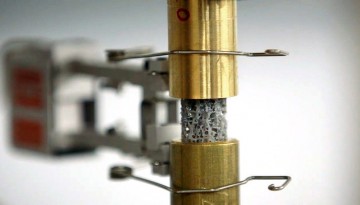
Cornell researchers have made a new discovery about how seemingly minor aspects of the internal structure of bone can be strengthened to withstand repeated wear and tear, a finding that could help treat patients suffering from osteoporosis and create durable, lightweight materials.
Urbano, a free software recently launched by Cornell researchers, employs data and metrics to help urban planners add walkability features to their designs.
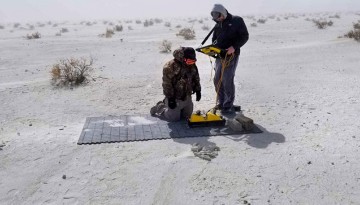
Invisible footprints hiding since the end of the last ice age – and what lies beneath them – have been discovered by Cornell researchers using a special type of radar in a novel way.
Three Cornell astronomers have been appointed to panel membership for the Decadal Survey on Astronomy and Astrophysics, a partnership between the National Academies and the astronomical community to identify key priorities in astronomy and astrophysics.
Cornell’s Center for Data Science for Enterprise and Society, launching this fall and led by David Shmoys, will enhance research in the increasingly important field of data science.