Cornell engineers have created a synthetic vascular system for soft robots capable of pumping an energy-dense hydraulic liquid that stores and deploys energy in an integrated design.
A Cornell-led team has developed a way to use machine learning to analyze data generated by scanning tunneling microscopy, yielding new insights into how electrons interact and showing how machine learning can be used to further discovery in experimental quantum physics.
The American Astronomical Society Division for Planetary Sciences will honor Cornell astronomy professor Phil Nicholson with the 2019 Harold Masursky Award.
Published research by chemist Nozomi Ando, performed at CHESS, has identified a new vulnerability in bacteria that offers a possible avenue for dealing with antibiotic resistance.
Projects ranging from a soil-swimming robot that can sense conditions in the root zone in real time to computational models that can predict produce spoilage received seed funds from the Cornell Initiative for Digital Agriculture’s new Research Innovation Fund.
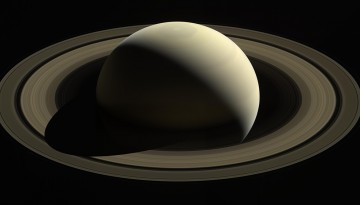
Instead of uncovering scientific answers, the spectral images from a Cassini flyby of Saturn’s rings triggered more questions than answers, says new research published June 13 in Science.
A hybrid system using geothermal energy for both heating and electricity could reduce campus greenhouse emissions around 25% more than using it just for heating, potentially bringing Cornell close to its goal of carbon neutrality, according to new research.
Just 10 taxis equipped with mobile sensors can survey a third of Manhattan’s streets in a day, inexpensively gathering valuable data about factors such as air quality, street conditions and bridge stability to provide an accurate and timely snapshot of a city’s health, according to a new study including a Cornell researcher.