The project aligns with Cornell Atkinson's core mission of supporting research that drives meaningful impact across public opinion, policy, and corporate practices.
Researchers developed a low-cost method to produce carbon-free “green” hydrogen via solar-powered electrolysis of seawater, with a helpful byproduct: potable water.
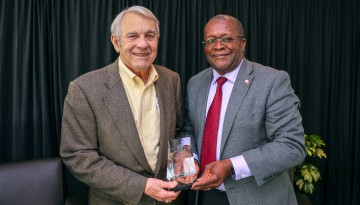
In recognition of his transformative leadership in nanomanufacturing technology, James C. Morgan ’60, MBA ’63, was presented with the Cornell Engineering Distinguished Alumni Award – the college’s highest alumni honor.
Cornell researchers have identified a pair of key neurological mechanisms in the brain – a cell type and receptor – that enable the psychedelic compound’s long-lasting effects.
The Southern Ocean – between Antarctica and other continents – will eventually release heat absorbed from the atmosphere, leading to projected long-term increases in precipitation over East Asia and the Western U.S.
A primary research focus for the new lab is understanding how young people develop a sense of purpose, and how it impacts their everyday experiences and contributes to their long-term development.
Cornell scientists launched aluminum particles, each about 20 micrometers in diameter, onto an aluminum surface at speeds of up to 1,337 meters per second – well beyond the speed of sound – and used high-speed cameras to record the impacts.
After a long ocean voyage, the first major component of the Fred Young Submillimeter Telescope has arrived at its final home: the Cerro Chajnantor mountaintop, more than 18,000 feet above sea level.
Cornell researchers are helping to transform portions of Chattanooga’s transit system into a seamless, AI-powered network where buses, shuttles, electric cars and bikes work together to provide the most efficient routes – at the push of a button.