Cornell has led research operations at the observatory since the 1960s, when NASA began sending people to space and scientists wanted to learn more about the physics of space weather.
Cornell researchers installed electronic “brains” on solar-powered robots that are 100 to 250 micrometers in size, so the tiny bots can walk autonomously without being externally controlled.
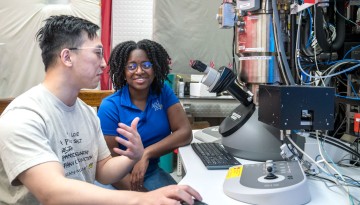
During the past year, students and faculty at Cornell and North Carolina Agricultural and Technical State University have been partnering on a research project built around two shared goals: increasing diversity in the field of materials science and transforming the way the world generates and stores energy.
Organizers added a strikethrough to the conference name this year, recognizing that the word “frontier” is rooted in a history of white-settler colonialism.
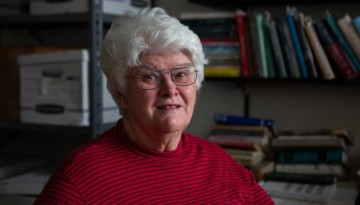
Her major work, “Women Scientists in America,” published in three volumes between 1982 and 2012, has redrawn the historical landscape of women in science.
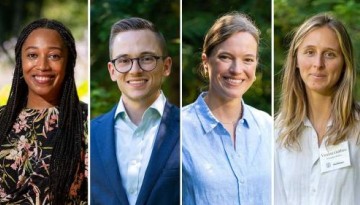
Fifteen new faculty are bringing innovative ideas in a wide range of topics to the College of Arts & Sciences’ nexus of discovery and impact, including climate change, astronomy, identity studies and the economy.