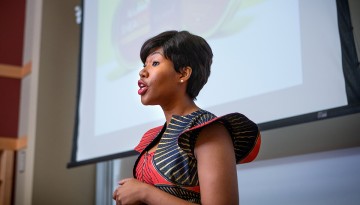
Students from 11 startup companies with products including organic skin care products and concussion detection devices pitched their ideas March 20, vying for the 2017 Student Business of the Year.
Scientists announced this week that a consortium led by Cornell will begin construction in Chile's Atacama Desert of a powerful telescope capable of mapping the sky at submillimeter and millimeter wavelengths.
After traveling through Vietnam's Mekong Delta in January, examining climate change through the lens of another country, four Cornell students toured the halls of Congress in late March to tell all about it.
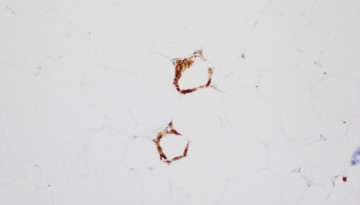
Women with a healthy body mass index may be at risk of breast cancer because of enlarged fat cells in their breast tissue that trigger an inflammatory process, Weill Cornell Medicine research finds.
Cornell University Press has been awarded a National Endowment for the Humanities/Andrew W. Mellon Foundation grant worth nearly $100,000 to fund the open access initiative, Cornell Open.
Ryan Lombardi, vice president for student and campus life, expressed his condolences to the family and friends of Peiran "Joyce" Shi ’19, a student in the College of Arts and Sciences, who died in a car accident in New Jersey on April 3.
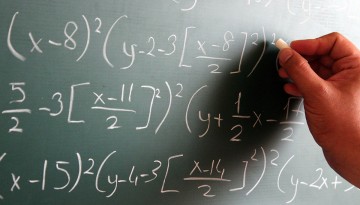
In conjunction with Math Awareness Month, historian Alberto Martinez will discuss the use of myth and invention in mathematics at a public lecture Thursday, April 13 in 251 Malott Hall.
For decades, scientists have known that unhealthy surroundings induce human illness. Now, research suggests that communities of very sick people may damage the environment, according to a new study in PNAS, April 3.
The Cornell Astronomical Society is launching a crowdfunding campaign to raise money for renovations to Fuertes Observatory. The campaign kicks off with the annual Yuri's Night event, this year on Friday, April 14.
Self-employed women working in digital creative industries, such as blogging or marketing, feel compelled to conduct business online in a traditionally feminine way, said Brooke Duffy, assistant professor of communication.
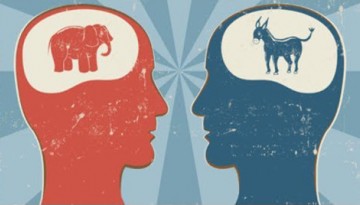
Suggesting that science is not immune to political partisanship, new research by computational social scientist Michael Macy shows liberals and conservatives have stark differences in the types of scientific books they read.