A committee has been set up to review the academic calendar, including breaks, start and end dates of the semester, and other calendaring considerations. Faculty, staff and students are asked to provide feedback.
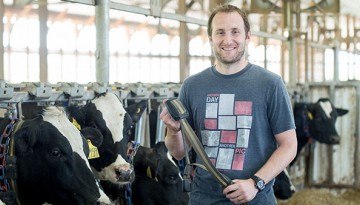
Collars with tags that carry an accelerometer – the same technology used in Fitbits for people – are effective non-invasive tools for tracking the health of dairy cows.
Cornell hosted the Dual-Career Symposium Nov. 9, fostering a regional network to discuss how to leverage collective resources to better address the challenging issue of dual-career hiring. More than 40 participants attended.
The Quill Guild, a creative writing club at Cornell, aims to create a community for collaborative learning and writing, was established in fall 2015 by Aisha Rupasingha ’18, an English major.
Anne Blackburn is a professor in the Department of Asian Studies and a faculty member in Cornell's South Asia Program, Southeast Asia Program and the Religious Studies Program.
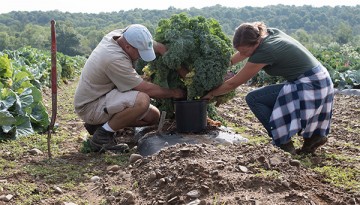
A Cornell breeding program is targeting the natural biodiversity of kale to further promote its acceptability and popularity as a leafy green vegetable among consumers.
Elissa Cohen '12 gave a talk on campus Nov. 3 about how her minor in inequality and other courses helped prepare her for a job at the Urban Institute's Income and Benefits Policy Center.
Reimagining a future for a neglected rural estate in Poland once in Ann Michel '77's family, students in a fall 2015 architecture design studio are featured in her documentary "Reversing Oblivion."
The first Big Red STEM Day exposed high school students from communities underrepresented in science, technology, engineering and mathematics to educational and career opportunities in those fields.
Jennifer Lawless, a nationally recognized expert on women in politics, examined the reasons for the underrepresentation of women in politics in the final Making of the President Series talk Nov. 14.
The willingness to make lifestyle changes to avert climate change may depend on the moral values closely aligned with liberal political leanings, according to Cornell research.
Students in a Mellon collaborative studies seminar in architecture, urbanism and the humanities spent eight days in Cuba this semester to study the island's changing politics and environment.