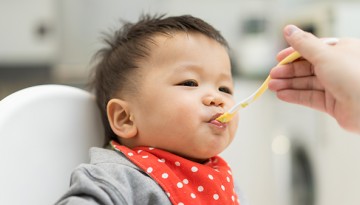
Babies expect people to like the same foods, unless those people belong to different social or cultural groups, according to Katherine Kinzler, associate professor of psychology and human development.
Researchers have proposed a way to enhance the conductivity of two-dimensional covalent organic frameworks to power density levels comparable to other porous carbon-based electrodes.
The Office of the Title IX Coordinator, dedicated solely to Title IX concerns, is headed by Sarah Affel, and includes two Title IX investigators, Elizabeth McGrath and Kareem Peat, and a case coordinator, Jessica Reynolds.
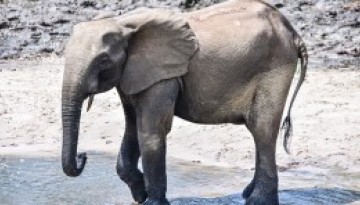
Because forest elephants are one of the world's slowest reproducing mammals, it will take almost a century for them to recover from the intense poaching they have suffered since 2002, a study finds.
Warm springs in the Great Lakes and Northeast regions – which create havoc for agriculture – may start earlier by mid-century if greenhouse gas emissions are not reduced, says a new study in Climate Dynamics.
A new master's degree in accounting will be offered at the Samuel Curtis Johnson Graduate School of Management in fall 2017. The College of Business' first new degree, the program is designed for maximum flexibility.
Chiara Formichi, assistant professor of Asian studies in the College of Arts and Sciences, says the stereotypes media reinforce about Islam do us a disservice.
Tomatoes are an ideal model species for plant research, but researchers at the Cornell-affiliated Boyce Thompson Institute made them more useful by cutting the time to modify tomato genes by a third.
The College of Arts and Sciences is undertaking a yearlong conversation with students, faculty and staff to reflect on the college's liberal arts mission.
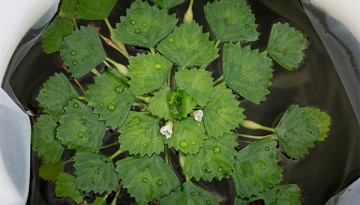
Bernd Blossey is close to the end of a research program that identified a leaf beetle, Galerucella birmanica, which feasts on water chestnuts, as the perfect predator to help clear New York's waters.