A research team led by Cornell has demonstrated how quantum computing and artificial intelligence can be used to design new peptides capable of capturing microplastics that pose serious risks to ecosystems and human health.
The first-of-its-kind material not only expands and contracts like blood vessels but is also biodegradable; new vascular cells to grow around the graft as the body absorbs it.
A Cornell-led collaborative research team has received a nearly $5 million grant from the Gates Foundation and the Chan Zuckerberg Initiative to leverage artificial intelligence and transform data on effective teaching practices into insights that can accelerate the science of teaching and learning.
An advanced imaging technique developed at Cornell has revealed the first two-dimensional, mechanically interlocked polymer – resembling the links in chainmail - confirming a breakthrough in both material design and electron microscopy.
Negotiating the challenges of safe, reliable, and affordable housing, Cornell AAP architecture and planning students collaborated with Slum Dwellers International and local residents to explore alternative housing design and construction strategies for Mathare, an informal settlement in Nairobi, Kenya.
Cornell researchers have discovered a way for ammonia oxidizing archaea, one of the most abundant types of microorganisms on Earth, to produce nitrous oxide, a potent and long-lasting greenhouse gas.
Claire Deng ’22 was doing a survey of archival papers at a Cornell library when she came across something unexpected: the full transcript of a speech given by Martin Luther King Jr. in 1957 – one of only two known in the country.
Cornell researchers Greeshma Gadikota, Phil Milner and Tobias Hanrath discuss their carbon capture research, including a new experimental CAPTURE-Lab at Cornell’s Combined Heat and Power Plant.
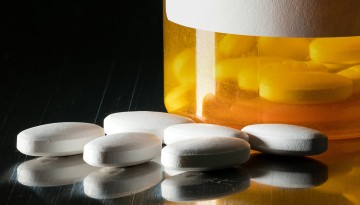
The overwhelming majority of those in New York City who obtained a naloxone kit to counteract opioid overdose had a high need for the drug, according to a new study by Weill Cornell Medicine investigators.
Cornell's Scientific Computing Training Series starts February 5, featuring webinars on AI, getting started with GPUs, Python, HPC job optimization and data transfer, data science, and data analysis with R.
Fulginiti’s novel, “Il dolore degli altri” (“The Pain of Others”), was chosen from among 114 competing manuscripts and will be published soon by Italian publisher ExCogita.