Héctor D. Abruña, the Émile M. Chamot Professor of Chemistry in the College of Arts and Sciences, will receive the Enrico Fermi Award, one of the oldest and most prestigious science and technology honors bestowed by the U.S. government.
Despite being unbound by space and time, fictional protagonists in American literature travel fewer miles than their nonfiction counterparts, according to a Cornell-led research team that used artificial intelligence to analyze nearly 13,500 books from the last 230 years.
Reinforcement Learning, an artificial intelligence approach, has the potential to guide physicians in designing sequential treatment strategies for better patient outcomes but requires significant improvements before it can be applied in clinical settings.
Researchers in the Department of Natural Resources and the Environment have developed a new model to understand wildlife interactions. They’ve found that coyote populations in upstate New York may benefit fishers but not American martens.
Turning aquatic vegetation near agricultural land into compost simultaneously eradicates habitat for disease-carrying snails while improving agricultural output and increasing incomes in northern Senegal, Cornell researchers have found.
Linda Nozick, director of the Department of Civil and Environmental Engineering at Cornell, helps professionals navigate risk in the Risk Analysis certificate program.
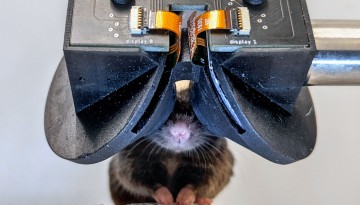
Cornell researchers built miniature VR headsets to immerse mice more deeply in virtual environments that can help reveal the neural activity that informs spatial navigation and memory function and generate new insights into disorders such as Alzheimer’s disease and its potential treatments.
R. Keith Dennis, professor emeritus of mathematics in the College of Arts and Sciences, died Dec. 12 following a prolonged battle with metastatic prostate cancer. He was 80.
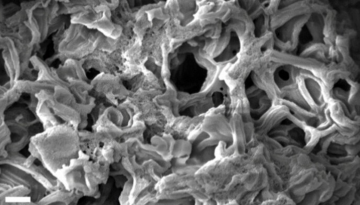
Cornell researchers have engineered a nanoporous carbon with the highest surface area ever reported, a breakthrough that is already proving beneficial for carbon-dioxide capture and energy storage technologies.
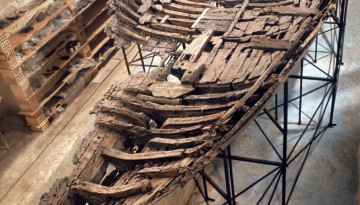
Sturt Manning, Distinguished Professor of Arts and Sciences in Classic, received the P.E. MacAllister Field Archaeology Award at the Annual Meetings of the American Society of Overseas Research, in November in Boston.