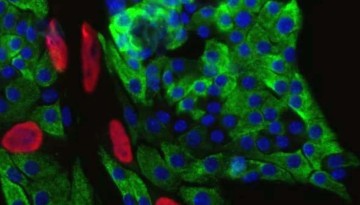
Cornell chemists have developed a technique that allows them to image polymerization catalysis reactions at single-monomer resolution, key in discovering the molecular composition of a synthetic polymer.
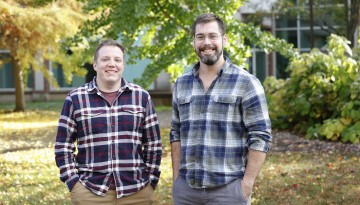
After service in the military, Chris Brunkhorst and Caleb Jones sought new outlets to channel their discipline and their commitment to helping others – and they both found it in neuroscience.
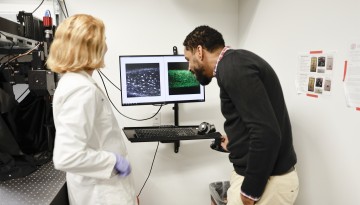
Researchers at Weill Cornell Medicine have uncovered a novel route to stimulate the growth of healthy insulin-producing pancreatic beta cells in a preclinical model of diabetes. The findings hold promise for future therapeutics that will improve the lives of individuals with Type 2 diabetes – a condition that affects more than 500 million people worldwide.
A special type of cell, called an osteocyte, may hold the key to some of the mysteries of osteoporosis. A research group led by Karl Lewis, assistant professor of biomedical engineering, is studying osteocytes in unique new ways.
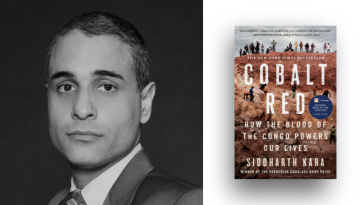
Siddharth Kara, award-winning author and anti-slavery activist, will discuss the immense toll cobalt mining has had on the people and environment of the Democratic Republic of the Congo at noon on Friday, November 10.
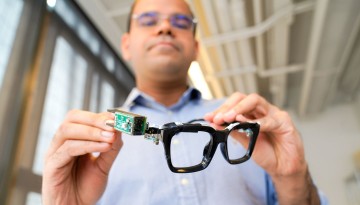
Throughout history, sonar’s distinctive “ping” has been used to map oceans, spot enemy submarines and find sunken ships. Today, a variation of that technology – in miniature form, developed by Cornell researchers – is proving a game-changer in wearable body-sensing technology.
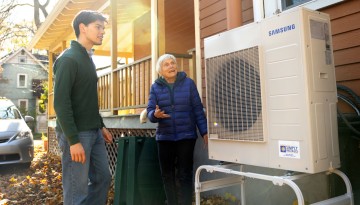
With an Ithaca-based nonprofit, Kristinko Mato ’24 is working to install efficient heat pumps in units rented by low- and moderate-income tenants, reducing costs and emissions, and improving air quality.
Live events Nov. 16-17 will illuminate questions about performance, photograph and video – and the complex relationship between the three – posed in a current Johnson Museum exhibition.
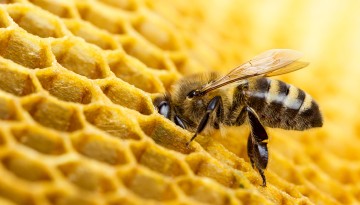
An analysis of beeswax in managed honeybee hives in New York finds a wide variety of pesticide, herbicide and fungicide residues, exposing current and future generations of bees to long-term toxicity.
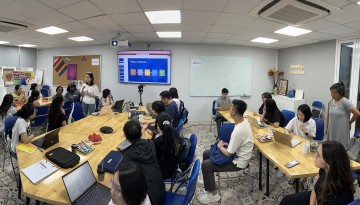
This summer, a team of students from VinUni and Cornell contributed to the Vietnam Adverse Childhood Experience Pathfinder project, which addresses pressing issues for young people in Vietnam.
In response to the COVID-19 pandemic, faculty in Cornell’s Public Health Program developed an innovative online training program to help boost skills in the public health workforce. A recent study recently reports that 94% of participants gained skills and knowledge they could apply directly to their work, and 86% developed a better understanding of public health.