Cornell faculty members have until Monday, Nov. 27, to submit nominations of distinguished scholars in the areas of arts, life sciences, and social sciences for the A.D. White Professors-at-Large Program.
Cornell’s endowment achieved a 3.6% return in the fiscal year ending June 30, concluding the year valued at just over $10 billion, the Office of University Investments reported.
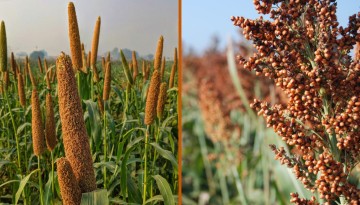
Cornell researchers are partnering on the newly announced Feed the Future Climate Resilient Cereals Innovation Lab (CRCIL), providing plant breeding expertise and powerful computational tools to increase the accessibility of cereal crops for those most vulnerable to hunger and malnutrition.
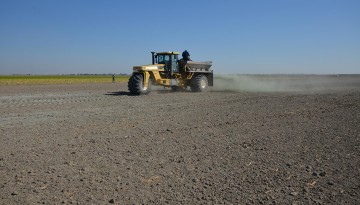
Adding crushed volcanic rock to cropland could play a key role in removing carbon from the air. In a field study, scientists at the University of California, Davis, and Cornell University found the technology stored carbon in the soil even during an extreme drought in California.
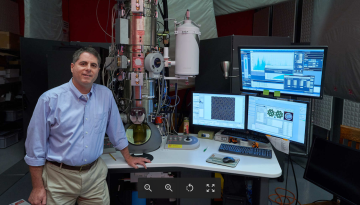
David Muller, professor of applied and engineering physics, has been honored with the 2023 John M. Cowley Medal from the International Federation of Societies for Microscopy and the 2024 Joseph F. Keithley Award for Advances in Measurement Science from the American Physical Society.
Cornell’s new AI Strategy certificate program offers a nuanced curriculum for leaders who are ready to leverage the power of AI in various business contexts.
Researchers developed a method to efficiently engineer intricate nanostructures through a form of phase separation – a process akin to the way water and oil uncouple in salad dressing.
Certain gut-dwelling fungi flourish in severe cases of COVID-19, amplifying the excessive inflammation that drives this disease while also causing long-lasting changes in the immune system, according to a new study led by investigators at Weill Cornell Medicine and NewYork-Presbyterian.
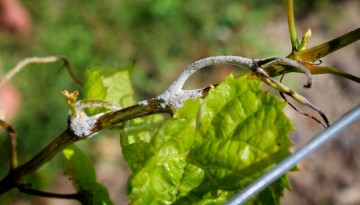
Researchers at Cornell have discovered a new grape downy mildew resistance gene – giving the wine and grape industry a powerful new tool to combat this devastating disease.
Researchers from the Charles H. Dyson School of Applied Economics and Management have developed a new method for measuring food insecurity, which for millions of people in the U.S. is more than just an abstract concept.
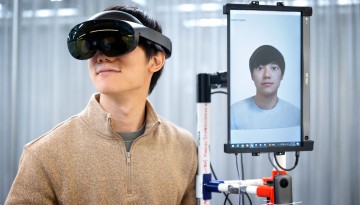
Researchers from Cornell and Brown University have developed a souped-up telepresence robot that responds automatically and in real-time to a remote user’s movements and gestures made in virtual reality.
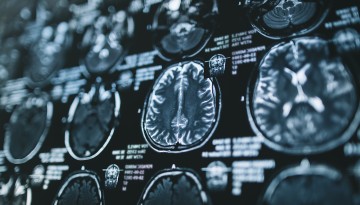
Research findings suggest that women who took hormones in midlife to treat their menopause symptoms were less likely to develop dementia than those who hadn’t taken estrogen.