Ding Xiang Warner won a 2020 American Council of Learned Societies Fellowship to study World War I trench art – the 3D creations made by Chinese laborers who dug the trenches pivotal to the allied effort in WWI.
A comparative analysis of COVID-19 policies across 18 countries, led by researchers from Cornell and Harvard University, shows that varied public health and economic outcomes are linked to underlying characteristics of each society.
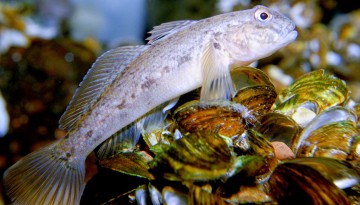
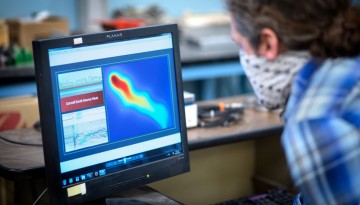
In a proof-of-principle study, Cornell researchers describe a new technique in which they analyzed environmental DNA – or eDNA – from water samples in Cayuga Lake to gather nuanced information about the presence of invasive round goby fish.
As part of its mission to make Cornell a more diverse and inclusive environment for faculty, staff and students, the Presidential Advisors on Diversity and Equity have awarded three grants of $15,000 apiece for 2021 programming.
Mobile contact-tracing technology has emerged as one way to contain COVID-19, but contact tracing apps, which require a critical mass of adopters to be effective, face serious obstacles in the U.S., Cornell researchers have found.
Entrepreneurship at Cornell has named Jessica Rolph ’97, MBA ’04, co-founder and CEO of early childhood development startup Lovevery, its 2021 Cornell Entrepreneur of the Year.
With just a push of a button, faculty and students can create dozens of design variations for anything they want to build. It's all thanks to Cornell's partnership with engineering-software company Autodesk, which is helping students win competitions and improve their research.
A $10 million gift to the College of Architecture, Art and Planning has been given to the college by a multi-generational Cornellian family to name and permanently fund its NYC program.
Paul Krause ’91, the university’s vice provost for external education and leader of eCornell, discusses his role and the new unit that encompasses the university’s various external education programs.