Sophomores in the Milstein Program in Technology and Humanity were supposed to spend the summer of 2020 at Cornell Tech, but due to the pandemic, that program has moved online.
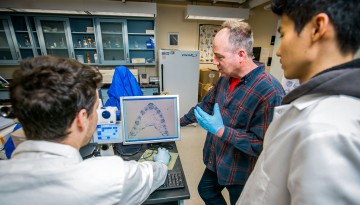
Plant biologist Michael Scanlon received a $1.8 million grant from the National Science Foundation Plant Genome Research Program to continue his research on the process of shoot development in maize.
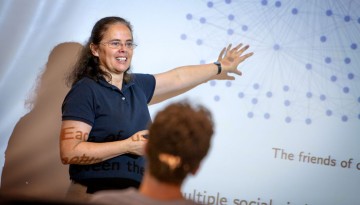
Éva Tardos, the Jacob Gould Schurman Professor of Computer Science, has been elected to the American Philosophical Society, the oldest learned society in the United States.
Historian Barry Strauss notes that plagues and epidemics have often been linked to wars. The current pandemic will highlight the fragility of society and significantly influence U.S. politics – with unknown consequences – and the U.S.-China relationship, he says.
Risk communicators must get trust, tradeoffs and preparedness right as the COVID-19 pandemic progresses, according to Cornell experts Dominic Balog-Way and Katherine McComas.
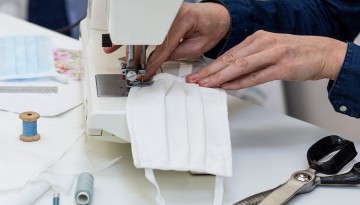
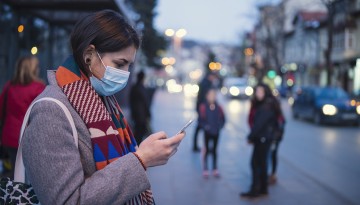
Rob Scott, director of Cornell Prison Education Program, has organized 14 New York colleges and universities to provide masks for every person incarcerated in the state – nearly 43,000 people.
The proliferation of medical misinformation on social media and the human experience of social distancing are among the pandemic-related topics to receive rapid response grants from the Cornell Atkinson Center for Sustainability.
Alecia Sundsmo, currently clinical director of mental health services at the University of Wisconsin, Madison, has been named Cornell Health’s new director of Counseling and Psychological Services, effective July 1.
Wheat scientists from China, Ethiopia, Germany, India and Uruguay have been honored by the Cornell's Borlaug Global Rust Initiative as Jeanie Borlaug Laube Women in Triticum Early Career awardees.
A statistical analysis of all 50 states and Washington, D.C., found that social distancing measures slowed the spread of coronavirus on the whole, but did not reduce the number of new infections per day.
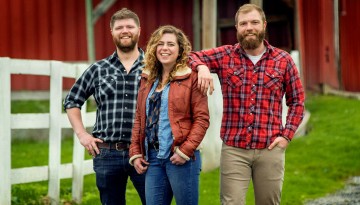
Lively Run Goat Dairy of Interlaken, New York, co-owned by Dave Messmer ’17, is doing its part to help those in the region struggling during the COVID-19 pandemic.
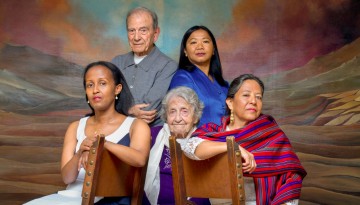
The voices of survivors of the Holocaust and other atrocities will live on through Cornell University Library’s recently acquired permanent access to USC Shoah Foundation’s Visual History Archive.