Barbara Graziosi, a professor of classics at Princeton University, will deliver the three-part Townsend Lectures, Sept. 10, 13 and 17, on the theme of “Homecoming and Homemaking in the Ancient Mediterranean.”
The Sustainable Cornell Council, announced Sept. 9, will direct and coordinate Cornell’s role as an international leader in addressing climate change and promoting sustainability. It replaces two previous sustainability groups.
Lakes of liquid methane that pock the landscape on Saturn’s moon Titan were likely formed by explosive, pressurized nitrogen just under the moon’s crusty surface.
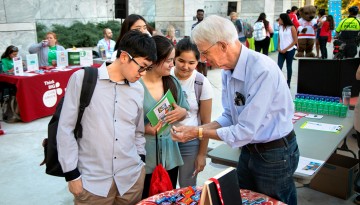
Poetry, belly dancing and bear hugs highlighted the BEAR Walk Community Fair, Sept. 5 in Collegetown, an event that encouraged Cornell students to engage with their adopted home and be good neighbors.
A new Android app developed by Cornell Tech researchers and collaborators will make it easy for people to collect their personal health data and share it with trusted medical providers or apps.
Events at Cornell this week include an exhibition on migration at the Johnson Museum; a new Toni Morrison documentary; and Social Science at Bailey Hall.
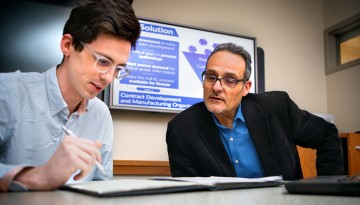
Emmanuel Giannelis, Cornell’s vice provost for research and vice president for technology transfer, intellectual property and research policy, discusses how the university is integrating research across its campuses and building an entrepreneurial ecosystem.
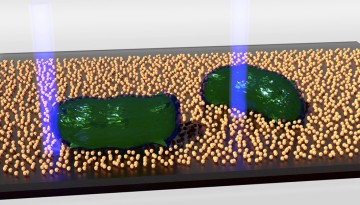
The U.S. Department of Energy has awarded an interdisciplinary team of Cornell researchers $2 million to study the combination of inorganic semiconductor nanoparticles and bacterial cells for more efficient bioenergy conversion.
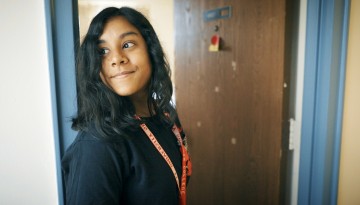
Shivani Ramsaran is one of dozens of Bronx high schoolers who have become better prepared for college thanks to scholarships and programs at Cornell’s School of Continuing Education and Summer Sessions.
In the first event of Cornell Botanic Gardens’ Fall Lecture Series, author Kathryn Aalto on Sept. 12 will discuss her book, “The Natural World of Winnie-the-Pooh: A Walk Through the Forest That Inspired the Hundred Acre Wood.”
The drawn-out process for diagnosing Lyme disease could become a thing of the past – good news for the thousands of people each year who get the tick-borne illness.
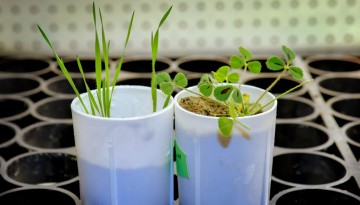
A discovery by Boyce Thompson Institute scientists could help farmers improve phosphate capture, potentially reducing the environmental harm associated with fertilization.