Cornell is leading the largest single deployment of seismometers along the Alaskan Peninsula – a $4.5 million endeavor to solve long-standing mysteries about the region.
The United Way of Tompkins County will celebrate its 21st annual Stephen E. Garner Day of Caring and kick off its 2017-18 Community Campaign Sept. 13, 9 a.m. to 4 p.m., at Stewart Park’s large pavilion.
Historian María Cristina García examines the challenges and history of refugee and asylum policy in the United States in her new book, "The Refugee Challenge in Post-Cold War America."
Vijay Pendakur, who became Cornell’s Robert W. and Elizabeth C. Staley Dean of Students in January, discusses his role, student life, diversity and transformative college experiences.
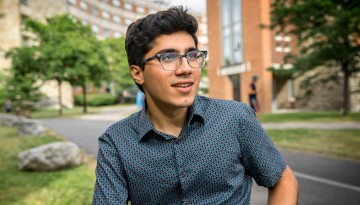
Freshman Abu Qader is running a company, GliaLab, which is developing software that can improve the accuracy of breast cancer diagnoses, especially in developing countries.
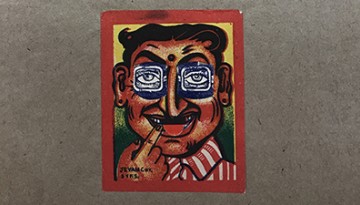
Cornell is celebrating the Bombay poets, who transformed English-language Indian poetry from flowery to gritty in the second half of the 20th century, with an exhibition and symposium.
On Aug. 26, more than 45 actors, dancers, directors, playwrights, stage managers and technical crew came together to produce four plays in 24 hours during the annual Festival 24.
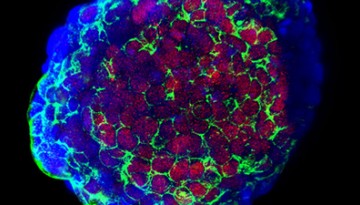
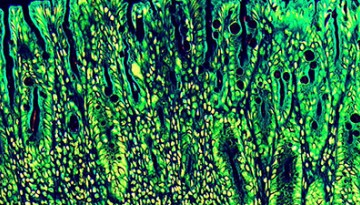
Nerve cells in the gut play a crucial role in the body’s ability to marshal an immune response to infection, according to a new study from Weill Cornell Medicine scientists.
The second annual Cornell Neurotech Mong Family Foundation Symposium on Sept. 22 will feature three neuroscientists who will discuss their research exploring the brain.
Slavery in West Africa has an ancient lineage dating to Biblical times. Sandra Greene’s new book, “Slave Owners of West Africa: Decision Making in the Age of Abolition,” explores the lives of three West African slave owners during abolition in the 19th century.