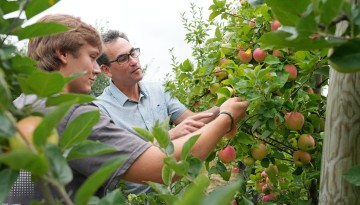
Cornell University Agricultural Experiment Station (Cornell AES) manages nine research farms and 127,000 square feet of greenhouse space on Ithaca’s campus and across New York state. While these facilities are designed to support research, they are also used as unique teaching tools for two dozen courses covering topics in plant science, soil science, entomology, food systems, agricultural machinery, and more.
This fall, Jake Anbinder, a historian with an interest in cities and strong ties to public policy, is presenting two conference papers elaborating on his award-winning book project.
During “Beyond 2024: Envisioning Just Futures and Equitable Democracy,” faculty and students from across the university will come together to creatively showcase research and art, build community and be inspired to imagine a better future.
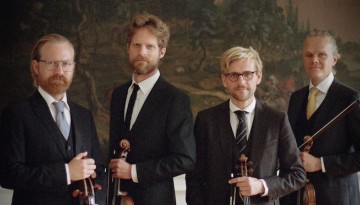
At Cornell, the GRAMMY-nominated quartet will perform works by Caroline Shaw, Haydn, Shostakovich, and a selection of their original compositions and traditional folk tunes.
Mia Bachrack ’25 and Sophia Peck ’26 are working on an independent study focused on costume designer Edith Head with the Cornell Fashion + Textile Collection and Cornell Cinema.
After decades of engineering probes to study natural environments, a Cornell engineer has adapted the technology to improve drug manufacturing processes with pharmaceutical company Merck.