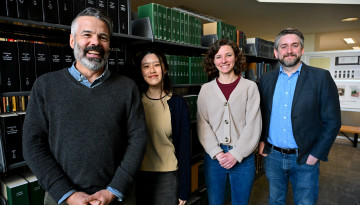
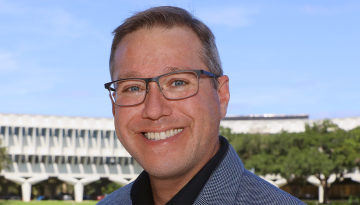
Matt Kibbee is honored for his work on training librarians in evidence synthesis, the art and science of gathering and combining results from multiple studies.
A lecture featuring sociologist Steven Yearley on carbon sinks and climate policy will launch the Trevor Pinch Memorial Lecture Series on April 22 – Earth Day.
Distinguished Visiting Journalist Keri Blakinger ’14 will host an in-depth look at capital punishment April 23 with a screening of her Oscar-nominated documentary “I Am Ready, Warden” and a faculty panel.
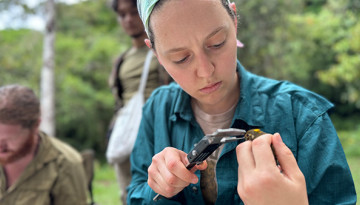
Cornell Atkinson has announced 40 research grants to support undergraduate and graduate student researchers whose work will support sustainability, biodiversity and agriculture.
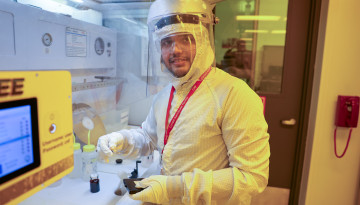
Nandan Reddy Muthangi, an M.Eng. student in Cornell’s Department of Materials Science and Engineering, is partnering with a company to develop new methods for building semiconductor test chips that improve manufacturing reliability.
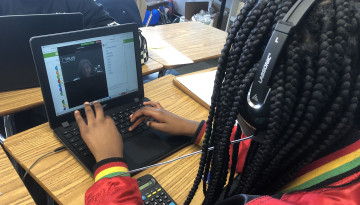
The National Tutoring Observatory is releasing a new app that lets researchers analyze large datasets of text with the help of AI, for learning about effective teaching and other social science questions.
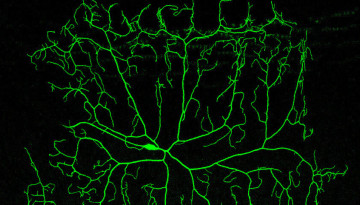
Researchers at Cornell University have developed a powerful new genetic toolkit that allows scientists to study how genes function at the level of individual cells, an advance that could accelerate discoveries in development, neuroscience and disease.