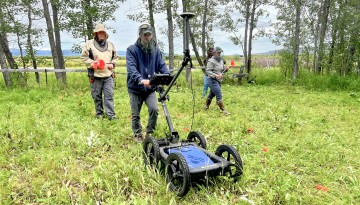
A Cornell research scientist used ground-penetrating radar and AI modeling to locate the communal graves of approximately 93 victims of the Spanish influenza at Pilgrim Hot Springs in Alaska.
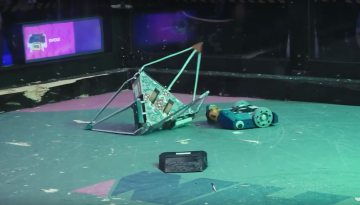
After battling three robots in the Norwalk Havoc Robot League’s March of the Bots competition, Cornell Combat Robotics looks to make upgrades with a $10,000 grant.
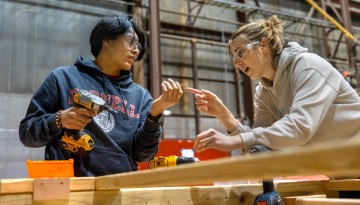
The 1983 student chapter of the American Society of Civil Engineers designed and built Flat Rock Bridge. Now the current student chapter is renovating it with the help of faculty, staff, and community members.
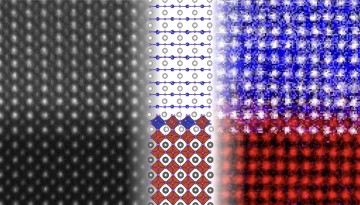
A new study has changed where scientists think Nickelate's superconducting ability might originate, providing a blueprint for how more functional versions might be engineered in the future.
Edward Dean Wolf, a pioneer in nanofabrication who joined Cornell in 1978 as the first director of what would become the Cornell Nanoscale Science and Technology Facility, died March 11 in Ithaca. He was 87.
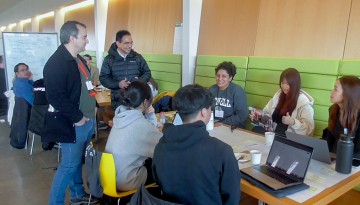
The Cornell Institute for Digital Agriculture Hackathon, an all-weekend event, drew 150 undergraduate and graduate students from most of Cornell’s schools and colleges to the College of Veterinary Medicine.
Ten Cornell postdoctoral researchers who plan to harness the power of artificial intelligence (AI) in areas like materials discovery, physics, biological sciences and sustainability sciences have been named Eric and Wendy Schmidt AI in Science Postdoctoral Fellows, a Schmidt Futures program.
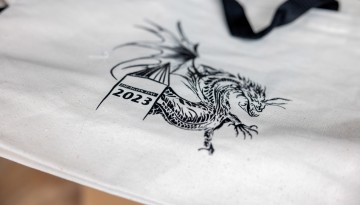
During the annual parade on March 31, first-year architecture students plan to unveil a sustainably constructed dragon “skinned” in colorful fabric that will be removed as part of a finale reveal.