Cornell is a global leader in sustainability and climate change research, teaching and engagement. Our campuses are living laboratories for developing, testing and implementing solutions that address these most challenging issues.
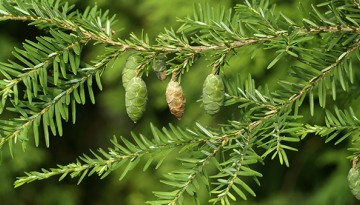

Fungal spore 'death clouds' key in gypsy moth fight

A fungus known to decimate populations of gypsy moths creates “death clouds” of spores that can travel more than 40 miles to potentially infect populations of invasive moths, according to a new study.

Cornell, EDF partner on five environmental projects

Cornell University’s Atkinson Center for a Sustainable Future and Environmental Defense Fund have announced five new research projects addressing urgent public health and environmental issues.

Ithaca startup wins $250,000 in Southern Tier clean energy competition

Six clean-tech companies working at the intersection of technology and sustainability - including one co-founded by a Cornell graduate - will use 76West competition prize money to help build the clean energy economy in the Southern Tier.

Chemists use electricity to amp up drug manufacturing

Give your medicine a jolt. By using a technique that combines electricity and chemistry, future pharmaceuticals soon may be easily scaled up to be manufactured in a more sustainable way.

Drone tech offers new ways to manage climate change

Cornell researchers are using drone technology to more accurately measure surface reflectivity on the landscape, a technological advance that could offer a new way to manage climate change.

Parasites, snails may factor in Adirondack moose decline

The apparent declining moose population in New York ’s Adirondack Mountains may be caused partly by tiny parasite-transmitting snails eaten by moose as they forage vegetation.

Invasive gobies may change Oneida Lake’s complexion - again

Oneida Lake, a kissing cousin to New York's Finger Lakes, may soon get an environmental makeover due to another in a series of invasive species bringing havoc to the water body’s ecosystem.

AguaClara begins construction of water plant in Nicaragua

AguaClara, an Engineering Project Team that has built 14 gravity-powered surface water treatment facilities in Honduras over the last 12 years, has begun construction of its first plant in Nicaragua.

Cornell trains gender-responsive researchers in Africa

Cornell's "Gender Responsive Cereal Grains Breeding" is being held at Makerere University in Kampala, Uganda, Aug. 7-16.