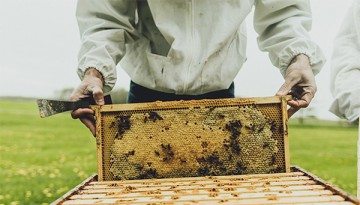
A small mite is causing big trouble for New York state's honeybee population and putting in peril the fruit and vegetable crops that depend on these pollinators.
Researchers Andrew Myers, Elaine Shi, Greg Morrisett and Rafael Pass will explore a new approach that will make it easier to use cryptography to build more-secure systems.
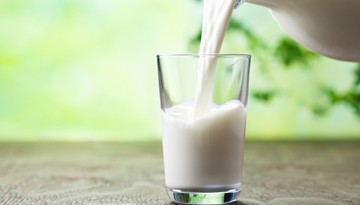
Cornell and IBM announced a joint research project June 23 that will use genetic sequencing and big-data analyses to help keep the global milk supply safe.
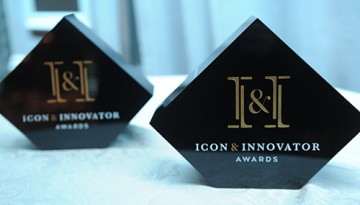
The School of Hotel Administration honored a hotel industry legend and a pioneer in ride-sharing apps at its ninth annual Cornell Hospitality Icon and Innovator Awards June 6 at The Pierre in Manhattan.
University of Pittsburgh professor Karen Matthews explored biological links to persistent social inequalities in childhood health during the 2017 Bronfenbrenner Lecture, held June 15 in Martha Van Rensselaer Hall.
Alejandro L. Madrid, professor of music, has been awarded the Royal Musical Association's Dent Medal. He is the first Latin American winner of the award, which has been given since 1961.
Using a technique it devised, a research group led by professor Matt DeLisa has shown the ability to take membrane proteins out of the membrane and turn them into water-soluble biocatalysts.
A class of enterprising women aspire to "make it" in the social media economy but often find only unpaid work, says Brooke Erin Duffy, assistant professor of communication, in her book, "(Not) Getting Paid to Do What You Love."
Alexander Hayes, assistant professor of astronomy, and Katherine Kinzler, associate professor of psychology and human development, were named Young Scientists 2017 by the World Economic Forum.
The U.S. public doubts the existence of "global warming" more than it doubts "climate change" – and Republicans are driving the effect, according to new research. But there's more agreement on climate science than meets the eye.
In the year 2100, more than 2 billion people - those who live on islands or along coasts - could become climate change refugees due to rising sea levels, according to Cornell researchers.
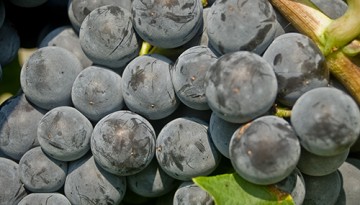
Big on flavor, aroma and size, Cornell's newest grape lacks one defining feature: a name. Grape breeder Bruce Reisch ’76 is offering the public the chance to name it.