The student-run organization Cayuga's Watchers has been getting national attention for its mitigation of high-risk drinking, and now schools around the country want to establish similar organizations.
Bactana Animal Health, a new company providing a natural, sustainable alternative to dosing livestock prophylactically with antibiotics and hormones, joined Cornell’s McGovern Center in May.
On May 11 eight nations that adopted the first Arctic Invasive Alien Species strategy and action plan – a section of the Arctic Council’s Fairbanks Declaration – authored by scientists led by the Atkinson Center's David Lodge.
A person's gender, race and generation matter a lot for whether they are judged as “thin enough” or “too fat." “It looks like obesity is in the eye of the beholder,” said Vida Maralani, associate professor of sociology.
A national commission that included leaders from CALS announced May 16 a comprehensive, coordinated effort to solve food and nutrition security challenges that pose humanitarian, environmental and national security risks.
A Cornell-led group of researchers has developed a method for converting near-infrared light to mid-IR, while retaining the desired shape of the beam and effectively increasing its bandwidth.
Gerald Hector, vice president for financial affairs, has filled three key positions in the Division of Financial Affairs – university controller, tax director and director of the University Finance Service Center.
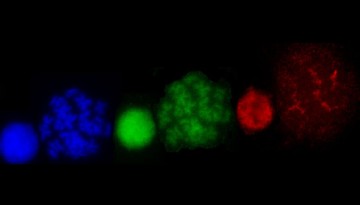
Stem cells preserve their identities after cell division by using a series of protein "bookmarks" on their genes, according to new research published by scientists at Weill Cornell Medicine.
"Side by Side," artist Pepón Osorio's Cornell Council for the Arts Biennial installation in Rand Hall, depicts one local family in the context of empathy as a point of contact within social systems.