Cornell's Student Multidisciplinary Applied Research Team was recognized for its impact on poor communities by earning the L.A. Potts Success Story award on Dec. 5.
The 2016 winners of the Mabati Cornell Kiswahili Prize for African Literature have been announced in fiction and poetry. Winners hail from Tanzania and Kenya.
Is Donald Trump a fascist? On Dec. 5, the Theory Reading Group examined this question in a room crowded with students and faculty, with formal remarks by Enzo Traverso and Isabel Hull.
Barbara Knuth announced Dec. 12 that graduate students who hold DACA status and receive funding through the university will continue to receive funding for the complete length of time they were offered in their admissions letters.
Influential composer and conductor Karel Husa, who taught at Cornell for 38 years and conducted major orchestras as well as campus ensembles, died Dec. 14 in North Carolina. He was 95.
Many new "sharing economy" companies, like Uber and Airbnb, use consumer-sourced ratings to evaluate their workers – but these systems can include bias based on race or gender.
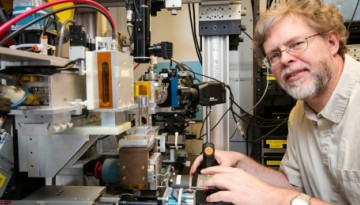
Researchers from Cornell and the University of Virginia collaborated at the Cornell High Energy Synchrotron Source in an effort to better understand the chemistry behind solar cells.
Computer science professor Hakim Weatherspoon has developed a system in which signals sent at the speed of light over fiber-optic cables keep data center computers in sync to within a few nanoseconds.