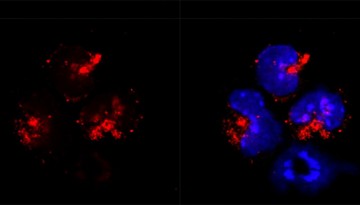
Weill Cornell Medical College investigators have discovered the precise molecular steps that enable immune cells implicated in certain forms of asthma and allergy to develop and survive in the body.
Events on campus in July include free lectures, concerts and performances; Staff Development Day, classic films outdoors on Willard Straight Terrace and a summer earth science symposium.
The 2015 Community Development Institute at Cornell July 14-15 will focus on strong families, strong communities and strategies to support the connections between them.
Cornell polymer engineers have made a mold for nanostructures that can shape liquid silicon out of an organic polymer material, paving the way for perfect, single crystal nanostructures.
Aiming to protect consumers from foodborne illness, produce farmers should wait 24 hours after a rain or irrigating their field to harvest crops - to reduce the risk to a major foodborne pathogen.
Researchers have found that irradiation of material creates nanometer-sized defects that trap swirling eddies in the flow of electrons, keeping them out of the way so more current can flow through superconductors.
Cornell researchers have gained a new insight into the way cells regulate the expression of their genes, and were surprised to find this regulation closely linked to the a cell’s cycle of growth and division.
The administration of Cornell President Elizabeth Garrett officially began today. Her formal installation as Cornell’s 13th – and first female – leader will be held Friday, Sept. 18, at 10 a.m. on the Arts Quad.
Weill Cornell Medical College researchers have found that the order in which obese patients with type 2 diabetes eat food matters and may help control glucose levels.
Cornell researchers used cutting-edge X-ray technology to noninvasively image fruit flies during and after mating, revealing changes that occur in the female fruit flies' reproductive tract.